


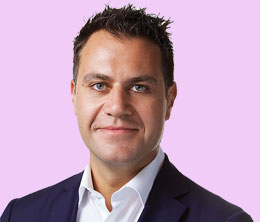


The best way to guard against any security threat is to share it with others; as the information is shared, others also get to know the nature of that particular threat and the ways to guard themselves against any future attack, observes Sean Duca, Vice President & Regional Chief Security Officer (CSO) for Asia Pacific, speaking with Vishwas Dass of Elets News Network (ENN)

Vice President & Regional Chief Security Officer (CSO) for Asia Pacific
Give us an overview of the Palo Alto Networks’ products offered in India and across the globe.
Nine years earlier we launched our first technology – Next- Generation Firewalls, and that’s what probably people know us for. Palo Alto is a security company focused on security enabling applications to run on an organisation’s network to prevent any type of known attacks. It also tries quickly closing the gap of turning an unknown threat to a known threat to prevent any possible damage taking place. Today, we have the platform that caters to the needs of our customers, both in public and private sector.

How does the company relate with the Government of India’s Digital India initiative?
With Digital India programme in full play, the focus needs to be on the security aspect of the digital technologies. We have people all around processing technology, but we need to address the challenges of privacy and security vis-a-vis Digital India initiative. Palo Alto has the infrastructure to throw security cover around the initiative.

The government possesses huge data which is highly vulnerable to security threats. What kind of security framework should be built to protect the data?

Firstly, it is important to understand the kind of data owned, its actual value, who is going to access that data, its location and whether there is a third party securing that data. The moment one is able to answer these queries, it is easier to understand the kind of security required. I think every organisation, whether government or non-government, has something of value, which needs to be guarded. In India, Cloud Computing is getting popular fast. So, the issue of security of data must be addressed at the same pace.

How do you see the security solution market shaping up in the upcoming years?
I think it has interesting times ahead. The threat landscape has changed and evolved over the past 20 years. The attack is faster these days. So, we first of all need to know the firepower of the enemy, the kind of applications they use. There is a need to control the applications and defend against the threats popping out there. We all believe that information sharing is critical and we started with Cyber Threat Alliance (CTA). It focuses on real-time sharing of malware and samples of advisory campaign are planned in real time.
You have said that India would require over 20,000 skilled professionals to propel the Digital India initiative. What are your suggestions to make campaign a success?
There are a couple of things and not a single answer and a lot of countries are trying to do similar things. The private sector probably needs to step in. We need to start teaching people what is really required for security. We can have even a curriculum for the purpose, on the lines of Australia. It is important to get to the grassroots.
What is your business plan to increase company’s market share in India?
We have witnessed phenomenal growth. For the past four years, we are working in India and have an amazing list of customers. We tried and kept growing. Globally, we are growing around 55 per cent year-on-year. In Asia- Pacific, we are growing at more than 80 percent. So, we see a tremendous growth.