


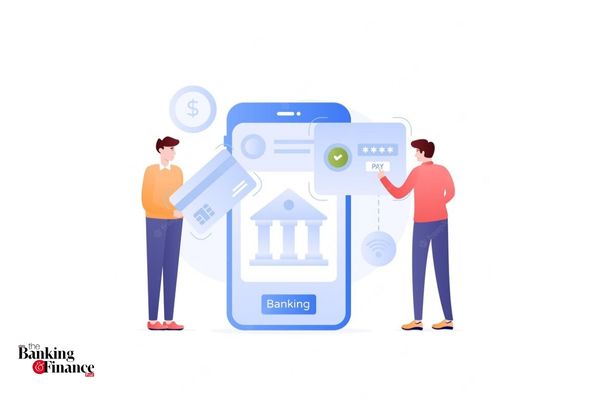


Customers nowadays, whether individuals or enterprises, are provided with innovative financial services through the platforms with which they are most accustomed. Banking as a service, or BaaS, has expanded access to financial goods beyond the four walls of the bank and into the hands of those who need it the most. Banking as a Service (BaaS) is another fintech innovation that allows banks and fintechs to collaborate.
In recent years, the banking industry has seen a drastic transformation. With the entry of fintech businesses into the market, this transition has become inevitable. Financial services are evolving in such a way that new products, channels, partnerships, and opportunities are emerging. At the heart of it all, Banking as a Service plays a crucial role.

What exactly is Banking as a Service?
BaaS is a comprehensive strategy that allows fintech companies and other third-party organisations to interface with a bank’s system via APIs. This enables organisations to construct novel financial services on the regulated infrastructure of the provider bank while also providing open banking services.
Why is Banking as a Service important, and who can benefit from it?

There are several methods for non-banking firms to improve their customer experience and increase revenue by providing their own financial services. However, if these banking services are provided, governments around the world will need organisations to obtain banking licences. Because of the systemic importance of banks in the economy, acquiring such licences would be challenging. It necessitates not just a large quantity of capital, but also adherence to stringent laws. Among other things, such restrictions address money laundering, deposit safety, and banking confidentiality. In this context, the importance of banking as a service becomes evident.
What distinguishes Banking as a Service from traditional banking?
To understand this, consider the functions of a bank: money storage, remittance, and payment processing. Banks must invest heavily and build the necessary infrastructure in order to support these functionalities.
The processes, together with the intricate infrastructure, result in gridlock. And it is because of these gridlocks that there has been a tremendous amount of thought and application for fintech companies and non-bank organisations to establish financial services — working with banks rather than building these financial services from the ground up.
What elements are influencing BaaS?
While fintech is evolving and changing the way financial services are delivered, there are a few significant factors that have contributed to the rise of BaaS.
- Banks are attempting to match the speed of fintech businesses. Alternatively, banks are collaborating with fintech businesses to develop new financial services.
- Startups and SMEs are beginning to take advantage of more convenient and effective business banking.
- The digital transformation and mobile-first strategy that has exploded in recent years have had a tremendous impact on BaaS.
- Banking business architecture is evolving into a much more sophisticated system that incorporates newer technology and techniques.
- Banking norms have evolved, which has aided in the healthy growth of industry.
Linkage between BaaS and B2B Credit?
With a market potential of USD 1 trillion, the banking as a service model has substantially equipped business-to-business (or B2B) transactions. This also explains why cheques are still used in only a quarter of B2B transactions. FinTechs that offer Embedded Finance APIs, which allow platforms catering to businesses to give tailored financing in context, are addressing pain issues in B2B payments.
Platforms that serve MSMEs, such as retail tech and B2B e-commerce, can, for example, give credit in-context to merchants on their platform. Embedded Finance enables lenders to use platform data to provide customised, short-term loans with personalised payback plans to MSME enterprises. Platforms can also provide merchants with Buy-Now-Pay-Later payment options at checkout, increasing Average Order Value and Customer Lifetime Value. Merchants can choose a convenient payment schedule and return the loan with little or no interest.