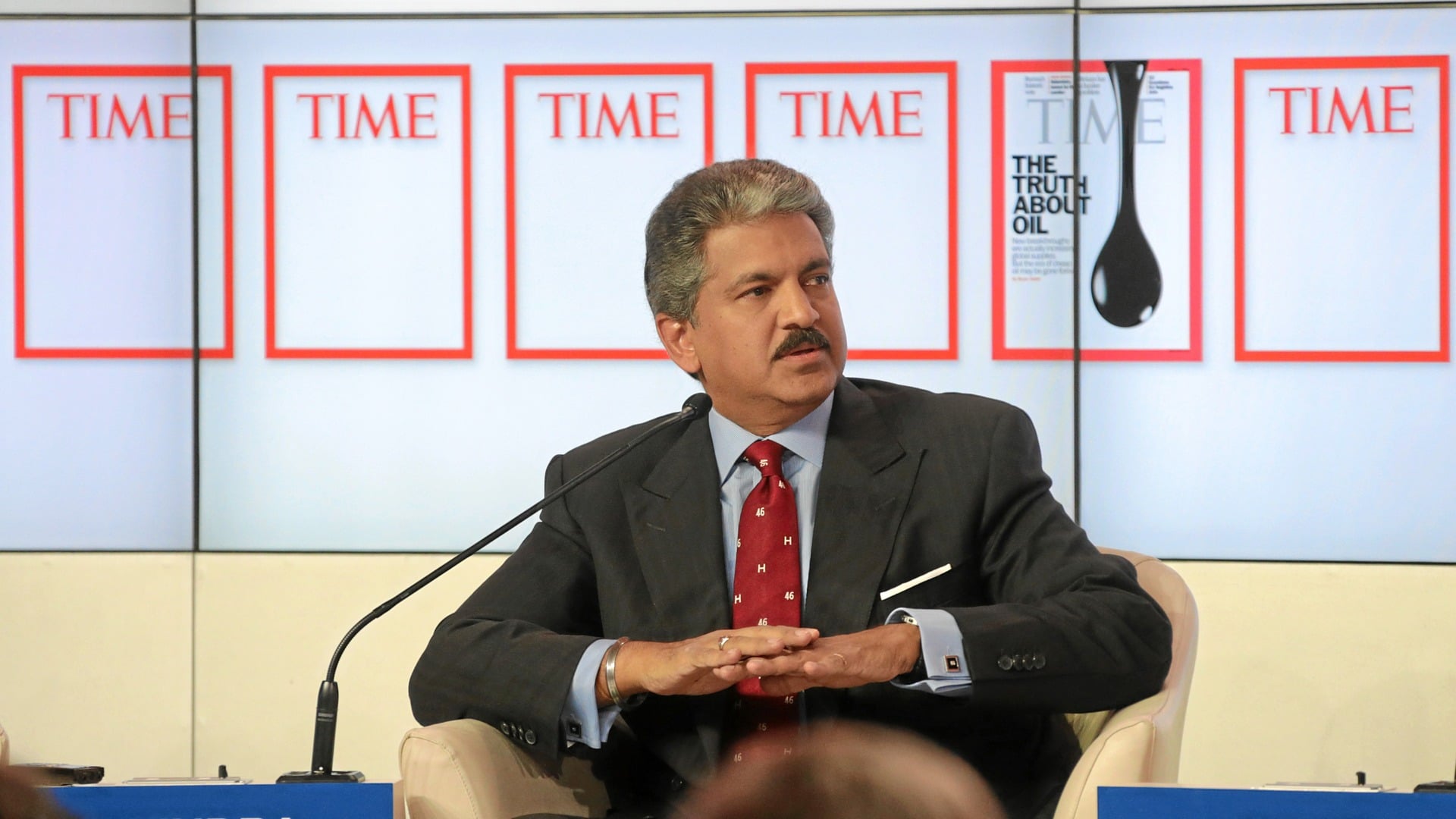


Mahindra Group Chairman Anand Mahindra has switched his everyday payments app to BHIM, the UPI app built by the National Payments Corporation of India (NPCI), after a conversation with NPCI Managing Director and Chief Executive Officer Dilip Asbe.
Mahindra shared the decision in a post on X on Monday, 26 October, which had drawn more than five lakh views and over 13,000 likes by Tuesday. He wrote that a friend had asked which payments app he used and suggested he try BHIM, which she called “our very own Indian app”. When Mahindra admitted he knew little about it, she introduced him to Asbe, who met him for a chat.

“NPCI provides the tracks”
Mahindra described the meeting as illuminating and used a railway analogy to explain how India’s payments stack works. Consumer apps such as PhonePe, Google Pay, Paytm and BHIM, he wrote, are like trains, while NPCI lays and runs the tracks they travel on.

He pointed to the scale of that network: UPI processed more than 2,400 crore transactions in September, or upwards of 80 crore a day, making India the world’s largest real-time payments market. Mahindra added that Asbe was already working on more such “railroads” that could enable new applications across wider areas of financial services.
Much of the post focused on Asbe himself. Mahindra said he was struck less by the scale of the achievement than by the NPCI chief’s humility and his pride in what his team had built, and noted that Asbe’s mother was a teacher. He closed by thanking Asbe and confirming: “I’ve switched to the BHIM app now!”

What BHIM is
BHIM, short for Bharat Interface for Money, was launched on 30 December 2016. It lets users pay straight from linked bank accounts using a UPI ID or by scanning QR codes, and to send and request money from any other UPI user. Because every UPI app runs on the same NPCI rails, a payment made through BHIM reaches recipients on PhonePe, Google Pay, Paytm or any other UPI app, and vice versa.
Why it matters for India’s fintech ecosystem
An endorsement from one of India’s most-followed business leaders puts a spotlight on NPCI’s own consumer app at a time when most UPI volumes run through a small number of third-party apps. It also frames UPI in terms many users rarely think about: the interoperable public infrastructure underneath the apps, rather than the apps themselves.
For banks, payment apps and fintechs, the post is a reminder that the next round of competition and innovation may come as much from new layers NPCI builds on the UPI rails as from features inside any single app, a point Mahindra himself hinted at when he spoke of Asbe’s plans for new rails in wider financial services.