

The Confederation of Indian Industry (CII) has submitted 15 priority banking and financial sector reforms to the High-Level Committee on Banking for Viksit Bharat, spanning banks, NBFCs, capital markets, insurance and financial technology. The industry body presented the proposals on Sunday, 22 November 2026, as inputs to the committee, which has begun work and must share its recommendations within six months.
What CII has proposed to the banking committee
The 15 CII banking reforms are grouped under five themes: credit for priority and emerging sectors; long-term capital for infrastructure and the energy transition; NBFCs and housing finance companies; insurance, pensions and private capital; and digital public infrastructure and institutional architecture.

Among the headline asks are a standing, rule-based liquidity window for well-governed NBFCs, a recalibrated priority sector lending framework, a wider investor base for lower-rated corporate bonds, parity for NBFCs in loan recovery, and a national catastrophe and climate risk pool.

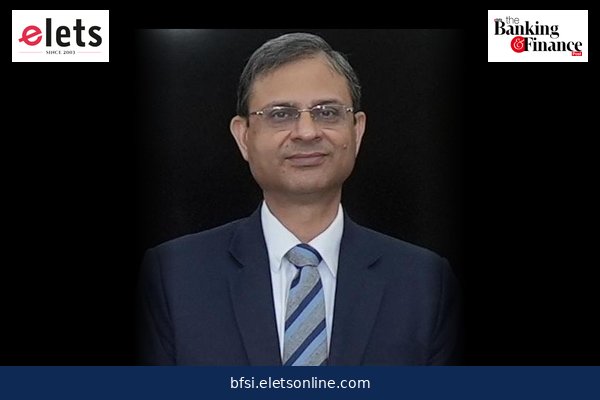
The committee was announced in the Union Budget for FY27 and is chaired by Suresh N. Patel, as Elets BFSI reported when the High Level Committee on Banking was constituted.
Why CII says India’s financial system must grow faster
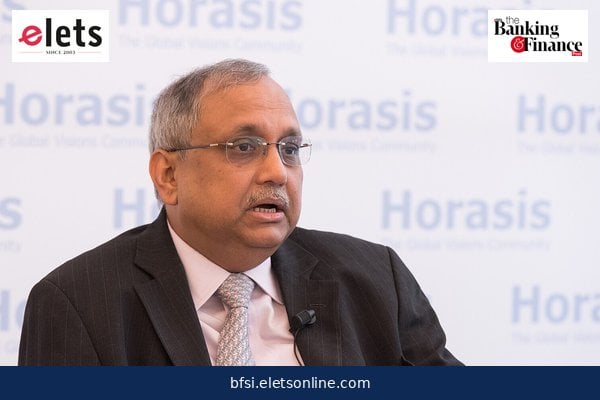
“The financial sector enters this phase from a position of strength, with healthy bank and NBFC balance sheets and a series of important measures by the Government and regulators over the past year. The task now is to build a system that can finance an economy several times its present size by 2047,” said Chandrajit Banerjee, Director General, CII, as quoted by The Hindu BusinessLine.

CII estimates that a $26.5 trillion economy in 2047 will need close to $106 trillion of financial assets, against about $7 trillion today. To get there, it says banking assets must grow 3.0 to 3.5 percentage points faster than nominal GDP, lifting the bank assets-to-GDP ratio from about 1.0 times towards 1.5 times.
- Insurance and pension assets: around 10% of GDP
- Corporate bond market: about 15% of GDP, versus 36% in China and over 80% in South Korea
- Bank IT spending: up about six-fold since FY15, while the cost-to-income ratio has stayed near 48%
The last data point stands out for bank technology leaders. In CII’s reading, the gains from years of digital investment are yet to show up in operating costs, a gap that AI and automation programmes across lenders are now being asked to close.
Priority sector lending and long-term capital
On priority sector lending, CII recommended raising the limit for renewable energy from ₹35 crore to ₹80–100 crore per borrower, so that medium-sized projects qualify, and bringing circular economy activities such as recycling and battery reuse into the framework. It also wants sub-targets for small and marginal farmers realigned to assessed credit demand, with categories reviewed every three to five years. RBI last eased priority sector lending norms for small finance banks in 2025.
For infrastructure and transition finance, CII proposed linking investment limits to an investor’s assets under management or net worth rather than to the size of the investee, harmonising norms for partially credit-enhanced bonds across IRDAI, EPFO and PFRDA, and building a framework for collateralised loan obligations on infrastructure loan pools to recycle bank capital.
It also suggested that pension funds, insurers and provident funds be allowed calibrated exposure to bonds rated below AA and to longer tenors, complementing the market-making framework. SEBI has separately said it is working with RBI and the Finance Ministry to improve corporate bond secondary market liquidity.
Insurance tax changes
For insurers, CII recommended that individual policies be zero-rated rather than exempt under GST, so that insurers can claim input tax credit, and that tax computation for insurers be aligned with IRDAI-prescribed reserves as the sector moves to Ind AS.
The proposals build on the credit and stability measures in the Union Budget 2026, and on the push for deeper lending to smaller borrowers that has defined much of the past year, including MSME lending crossing ₹40 lakh crore.
Key takeaways
- CII has submitted 15 priority reforms to the High-Level Committee on Banking for Viksit Bharat, across five themes including digital public infrastructure.
- Key asks include an NBFC liquidity window, a recalibrated priority sector lending framework and a national catastrophe and climate risk pool.
- CII estimates India will need about $106 trillion of financial assets by 2047, against roughly $7 trillion today.
- Bank IT spending has risen about six-fold since FY15, but the cost-to-income ratio remains near 48%.
- The committee must share its recommendations within six months.
Source: The Hindu BusinessLine, 22 November 2026; Confederation of Indian Industry.