

The Reserve Bank of India (RBI) on 27 November 2026 issued the Reserve Bank of India (Digital Payments – Card-based Transaction) Directions, 2026, folding 25 earlier circulars on debit, credit and prepaid card payments into one rulebook. The directions take effect immediately and apply to all payment system providers and participants, banks and non-banks alike.
The consolidation covers card security, authentication, card controls, tokenisation, storage of card data and the merchant discount rate (MDR) on debit cards. It follows a busy month for payments regulation, including NPCI’s revised UPI dispute rules that went live this week.
What the RBI card payment directions cover
According to the RBI notification (RBI/DPSS/2026-27/477), issued under Section 18 read with Section 10(2) of the Payment and Settlement Systems Act, 2007, the rulebook brings together:

- Card security: all credit, debit and PPI cards must be EMV chip cards, and ATMs and PoS terminals must support PIN and biometric validation.
- Domestic settlement: card purchases of goods and services within India must be acquired through a bank in India and settled only in Indian rupees.
- Authentication: card and tokenised card transactions follow the RBI’s 2025 authentication directions, with the existing exemption for eligible contactless payments of up to ₹5,000.
- Card controls: customers must be able to switch online, international and contactless use on or off and change their limits.
- Network choice: eligible credit card issuers must offer a choice of card networks. Issuers with 10 lakh or fewer active cards are exempt.
Tokenisation and card data rules stay in place
The directions keep the tokenisation framework that reshaped online checkout, covering customer consent, security certification, transaction limits and the right to deregister tokens. Merchants and other entities still may not store actual card details for online transactions, a rule that pushed payment gateways and platforms to build token vaults after 2022.
Earlier approvals, actions and acknowledgements given under the repealed circulars remain valid and are treated as granted under the new directions, Mint reported.
Debit card MDR caps unchanged
The existing ceilings on the MDR for debit card payments are carried over. For small merchants with annual turnover of up to ₹20 lakh, the cap stays at 0.40% for physical PoS and online card payments and 0.30% for QR-based card acceptance. For other merchants, the caps remain 0.90% and 0.80%.
The carry-over comes as the industry waits for clarity on UPI MDR for merchant payments, which is still to be notified.
Why it matters for fintechs and card issuers
The directions do not add new limits or authentication steps for cardholders. Their value is clarity: banks, card networks, payment aggregators and fintech issuers now have one document to check for compliance instead of 25 circulars issued between 2011 and 2024. That matters as card use keeps growing, with credit card spends overtaking ATM withdrawals for the first time in October 2026.
For newer issuers, including co-branded and fintech-led card programmes, the single rulebook also makes it easier to map product design against network choice, tokenisation and card control requirements from day one.
Key takeaways
- RBI issued the Card-based Transaction Directions, 2026 on 27 November 2026, effective immediately.
- The rulebook replaces 25 circulars on card security, tokenisation, card controls, network choice and debit card MDR.
- No new rules for cardholders; existing MDR caps and the ₹5,000 contactless exemption continue.
FAQ
Do the new RBI card directions change limits for cardholders?
No. The directions consolidate existing rules and do not announce any new transaction limit, authentication requirement or card facility.
Who must follow the card-based transaction directions?
All payment system providers and participants under the PSS Act, 2007, including banks and non-bank entities such as card networks and PPI issuers.
Also read: HDFC Bank Brings PayZapp, Card Apps In-House to Cut Cyber Risk
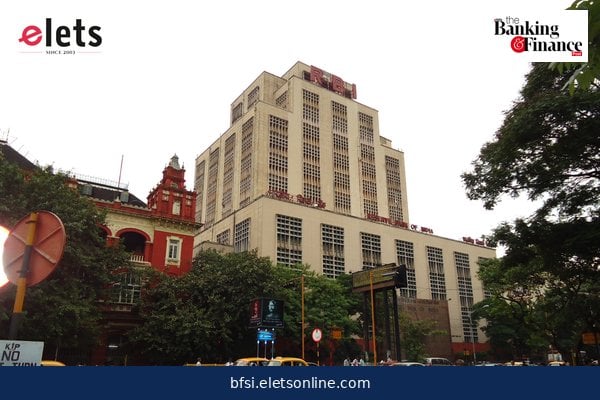
Featured image: Reserve Bank of India building in Kolkata. Photo: Kolkatan / Wikimedia Commons (CC BY-SA 3.0)