




The Reserve Bank of India (RBI) on 7 November 2026 dismissed social media messages claiming that standard Cheque Truncation System (CTS) cheque books would change after 31 December 2026 and that new books with updated security standards would apply from 1 January 2027.
In an official post on X at about 6:50 pm IST, the central bank said it is not introducing any such measures. The Reserve Bank of India’s clarification asked the public to rely only on information published by the RBI.

What did the circulating CTS cheque book message claim?
The RBI said the message claimed that standard CTS cheque books now in use would change from 31 December 2026, and that new cheque books featuring updated security standards would come into effect from 1 January 2027. Some forwards warned customers that existing books would no longer work after December 2026.

What did the RBI and PIB Fact Check say?
The RBI said: “It is clarified that at present Reserve Bank of India is not introducing any such measures with regard to the CTS cheque books. As such, the message is factually incorrect and misleading.” It asked members of the public to rely only on information the RBI publishes from time to time.
The Press Information Bureau’s fact-check account separately labelled the WhatsApp and social media claim as fake. In a PIB Fact Check post later the same evening, which the RBI reposted, it said the RBI had made no such announcement and urged people not to share unverified claims.

What is the Cheque Truncation System?
CTS is the electronic clearing arrangement through which banks process cheques using digital images and the data on the instrument, instead of moving the paper cheque from the collecting bank to the paying bank. It is the standard rail for cheque payments in India and shortens clearing cycles.
Cheque processing is still being upgraded at individual banks. The State Bank of India has separately set out plans to automate over 50% of cheque handling with AI, a technology change that does not require customers to replace existing CTS cheque books.
Why the RBI CTS cheque book clarification matters
Rumours about mandatory new cheque stationery can send customers to branches for replacements they do not need and can lend credibility to phishing or impersonation messages. The RBI’s public denial, backed by PIB Fact Check, gives banks a clear official line: there is no newly announced CTS cheque-book overhaul from 1 January 2027.
The note sits alongside the central bank’s other recent digital-risk communications, including cyber resilience rules for non-bank payment system operators and API safeguards for bank-to-NBFC fund transfers. Those are formal directions. This weekend’s message is a consumer alert that a supposed rule change did not happen.
Customers who receive similar forwards should check the RBI’s official website or verified social channels before acting. Separate RBI consumer-protection work, such as the framework giving UPI fraud victims a path to zero liability, likewise stresses official sources over viral messages.
Key takeaways
- On 7 November 2026 the RBI said it is not introducing new measures on CTS cheque books from 1 January 2027.
- Social media claims that existing CTS cheque books will change after 31 December 2026 were called factually incorrect and misleading.
- PIB Fact Check also marked the WhatsApp claim as fake and asked the public not to forward unverified messages.
FAQ
Do I need a new cheque book from 1 January 2027?
No. The RBI said it is not introducing any such measures on CTS cheque books, so customers do not need to replace existing CTS cheque books because of this rumour.
When did the RBI issue the clarification?
The Reserve Bank posted the clarification on X on 7 November 2026. PIB Fact Check repeated that the claim was fake later the same day.
Where should customers check cheque-book rule changes?
Only on official RBI channels, such as the central bank’s website and verified social accounts, and not on forwarded WhatsApp or social media messages.
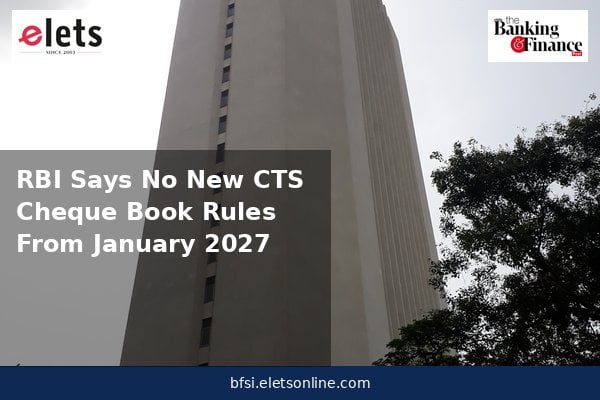
Featured image: Tower and building of the Reserve Bank of India, Mumbai branch. Photo: Pinakpani via Wikimedia Commons (CC BY-SA 4.0).