

Spice Money Limited, the rural fintech subsidiary of DiGiSPICE Technologies, has received in-principle authorisation from the Reserve Bank of India (RBI) to operate as a Payment Aggregator–Physical (PA-P) under the Payment and Settlement Systems Act, 2007. The approval allows the company to move into regulated, in-person merchant payment acceptance across the semi-urban and rural markets where it already runs one of India’s largest assisted-banking networks.
DiGiSPICE informed BSE and NSE of the development on October 23, 2026, noting that the RBI communication had been received by email the same day. In its filing, the listed parent said the authorisation will help Spice Money scale up revenue by leveraging its merchant network and expanding as a physical payment aggregator.

Third payment system licence for Spice Money
The PA-P nod is Spice Money’s third Payment System Operator (PSO) authorisation, adding to its existing Prepaid Payment Instrument (PPI) and Bharat Bill Payment Operating Unit (BBPOU) licences. A PA-P authorisation covers face-to-face and proximity-based digital payments for merchants, allowing Spice Money to extend regulated payment acceptance across its distribution network.

The approval is in-principle at this stage. According to the company’s disclosure, final authorisation will be granted only after Spice Money fulfils the conditions specified by the RBI within the stipulated timeline, and the business must comply with the central bank’s Master Direction on the Regulation of Payment Aggregators.
Aadhaar Pay and QR for Bharat’s small merchants
Spice Money plans to use the licence to onboard kirana stores, pharmacies, local traders and micro and nano merchants, many of whom still operate largely outside organised digital payment acceptance. The company also intends to serve enterprise customers such as non-banking financial companies (NBFCs), microfinance institutions (MFIs) and logistics firms, which handle significant volumes of collections in smaller towns and villages.

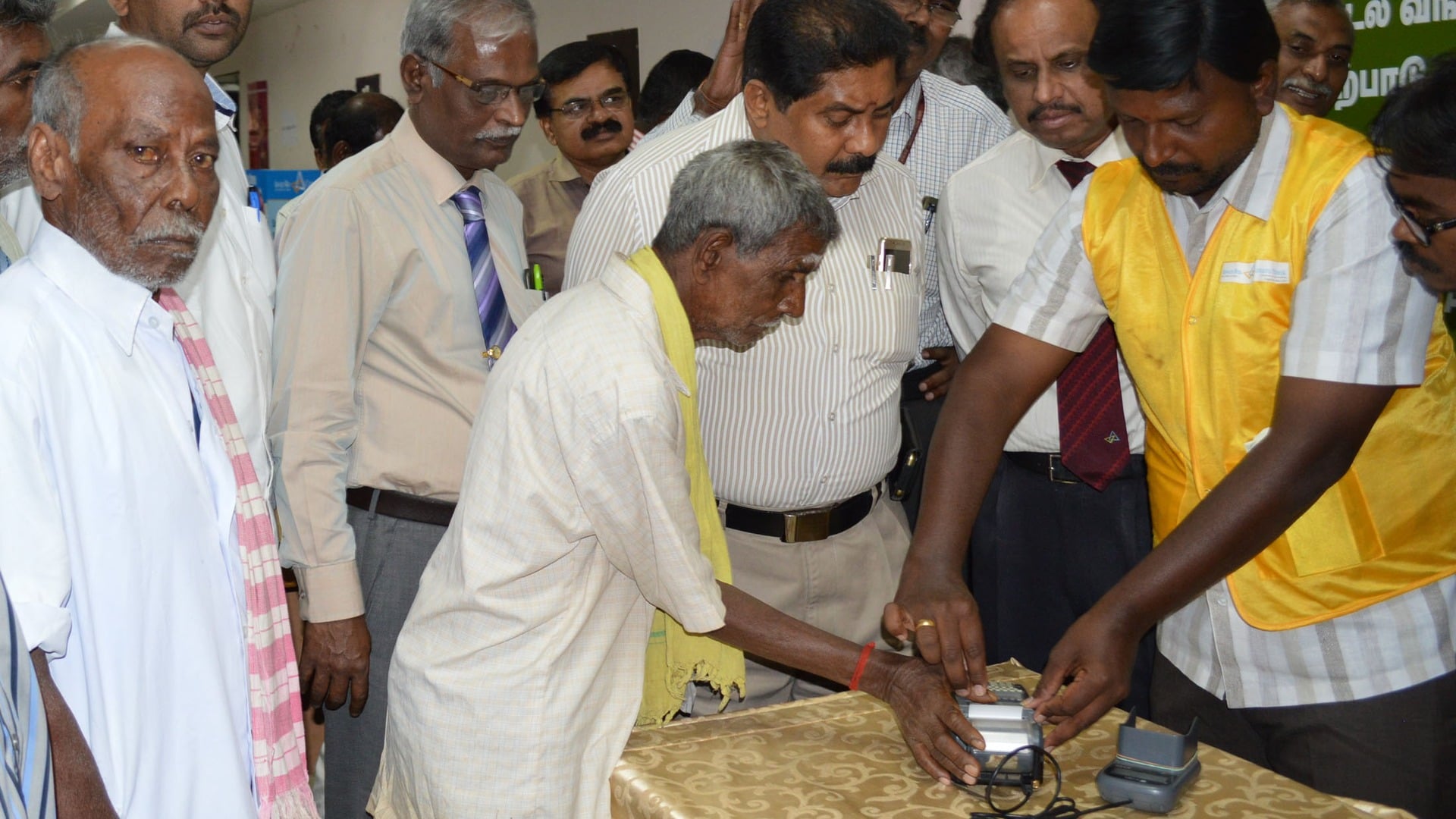
Acceptance will be built around Aadhaar Pay, which lets customers pay using biometric authentication linked to their bank accounts, and QR-based payment solutions.
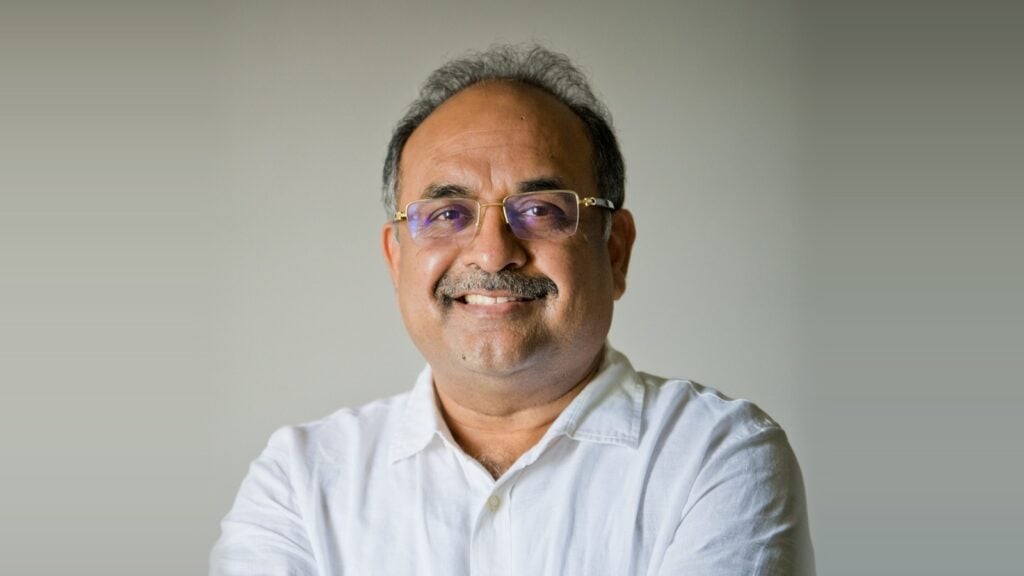
“With PPI, BBPOU and now PA-P, we hold three PSO authorisations that together cover how Bharat pays and banks transacts,” said Dilip Modi, Founder and CEO, Spice Money. “Our Adhikari network gives us a distinct advantage in reaching merchants who have so far remained outside organised digital payment acceptance. Through Aadhaar Pay and QR-based solutions, we will help kirana stores, local traders and small businesses accept digital payments with ease, and in doing so, bring more of Bharat into the formal financial system.”
Leveraging a 1.7 million-strong last-mile network
Spice Money operates through a network of roughly 1.7 million Adhikaris and business correspondent (BC) agents, including around 200,000 merchants, offering assisted banking, digital payments and other financial services in underserved markets. The company said the new authorisation will strengthen this assisted-banking ecosystem and open additional income streams for its last-mile partners.
The move builds on a series of recent product steps, including Ojas, its AI-powered virtual executive, and the launch of an NPCI AePS three-party cash deposit service aimed at widening financial access in rural and semi-urban India.
Why it matters
India’s digital payments growth has been led by UPI in urban and online commerce, but merchant acceptance in smaller markets remains uneven. Regulated physical payment aggregators with deep distribution can help close that gap, particularly where customers rely on biometric authentication and assisted transactions rather than smartphones. For the RBI, bringing such players under the PA framework also extends supervisory oversight to a growing segment of in-person payment flows.
With in-principle approval in hand, the focus for Spice Money now shifts to meeting the RBI’s conditions and converting its agent footprint into a merchant acceptance business at scale.