



As financial institutions generate massive volumes of interconnected data, traditional databases are increasingly struggling to uncover the hidden relationships that often reveal fraud, financial crime, and business opportunities. Knowledge graphs and graph databases are emerging as powerful technologies that enable organizations to connect data intelligently, providing deeper insights and significantly improving AI-driven decision-making.
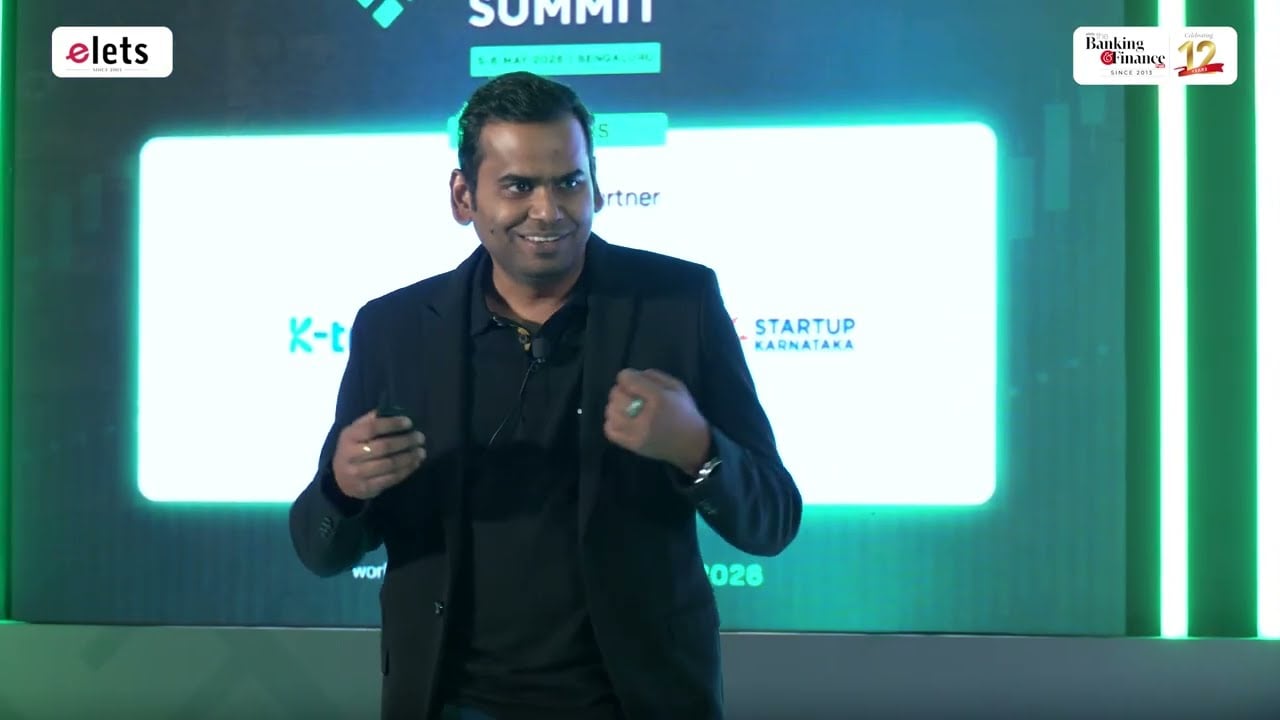
Speaking at the 2nd World Fintech Summit 2026, Pawan Mall, Senior Solution Engineer at Neo4j, highlighted how graph databases and knowledge graphs are reshaping fraud detection, anti-money laundering (AML), customer intelligence, and enterprise AI applications across the BFSI sector.

According to Mall, today’s financial ecosystem is far more interconnected than ever before. Customers interact through multiple channels, transactions flow across numerous institutions, and fraudsters continually evolve sophisticated methods to evade conventional detection systems. While traditional relational databases store information in separate tables, graph databases organize data based on relationships, enabling organizations to identify hidden connections in real time.
Neo4j, one of the world’s leading graph database platforms, has played a pioneering role in this space. Widely adopted by global enterprises—including a significant number of Fortune 100 companies—the platform helps organizations build connected data models that reveal complex relationships between customers, accounts, devices, transactions, identities, and behavioural patterns.
Mall explained that graph technology has become particularly valuable in combating financial crime. Modern fraud schemes often involve networks of mule accounts, synthetic identities, shell companies, and circular transaction patterns that remain invisible when data is viewed in isolation. Graph databases can instantly traverse millions of relationships, allowing investigators to detect suspicious transaction chains, identify fraud rings, and uncover money laundering networks far more efficiently than conventional systems.

He noted that as criminals increasingly leverage artificial intelligence to execute sophisticated attacks, financial institutions must also adopt smarter technologies. Knowledge graphs provide an intelligent semantic layer that enhances AI by adding context to enterprise data. Instead of relying solely on isolated datasets, AI systems gain a richer understanding of relationships, improving both the quality and explainability of their outputs.

A major challenge for enterprise AI is handling vast amounts of organizational data while maintaining accuracy. Knowledge graphs address this by acting as a structured memory layer where relationships and contextual information are preserved. This enables AI systems to retrieve relevant information more effectively and deliver responses grounded in enterprise knowledge.
Mall also discussed the growing role of GraphRAG (Graph Retrieval-Augmented Generation), an emerging AI architecture that combines large language models with graph databases. By incorporating connected enterprise knowledge into AI workflows, GraphRAG significantly improves response accuracy, contextual understanding, and reasoning while reducing AI hallucinations. This makes it particularly valuable for regulated industries such as banking and financial services, where accuracy and compliance are critical.
Beyond fraud prevention, graph databases are enabling organizations to build comprehensive Customer 360 solutions, enhance relationship mapping, improve risk intelligence, and support intelligent automation initiatives. By connecting previously isolated datasets, financial institutions can gain a more holistic understanding of customers, streamline operations, and make faster, more informed decisions.
Neo4j’s open-source platform further accelerates innovation by allowing organizations to build scalable graph-based applications tailored to their business needs. From financial crime prevention and compliance monitoring to enterprise AI and customer analytics, graph technology is becoming a foundational component of modern digital transformation strategies.
As AI adoption continues to accelerate across industries, the integration of knowledge graphs with intelligent systems is expected to play an increasingly important role. Connected data architectures not only improve fraud detection and regulatory compliance but also enable organizations to build more trustworthy, explainable, and context-aware AI solutions.
The session concluded with a clear message: knowledge graphs are no longer just a data management innovation—they are becoming a strategic asset for enterprises seeking to unlock the full value of their data while building the next generation of AI-powered financial services.