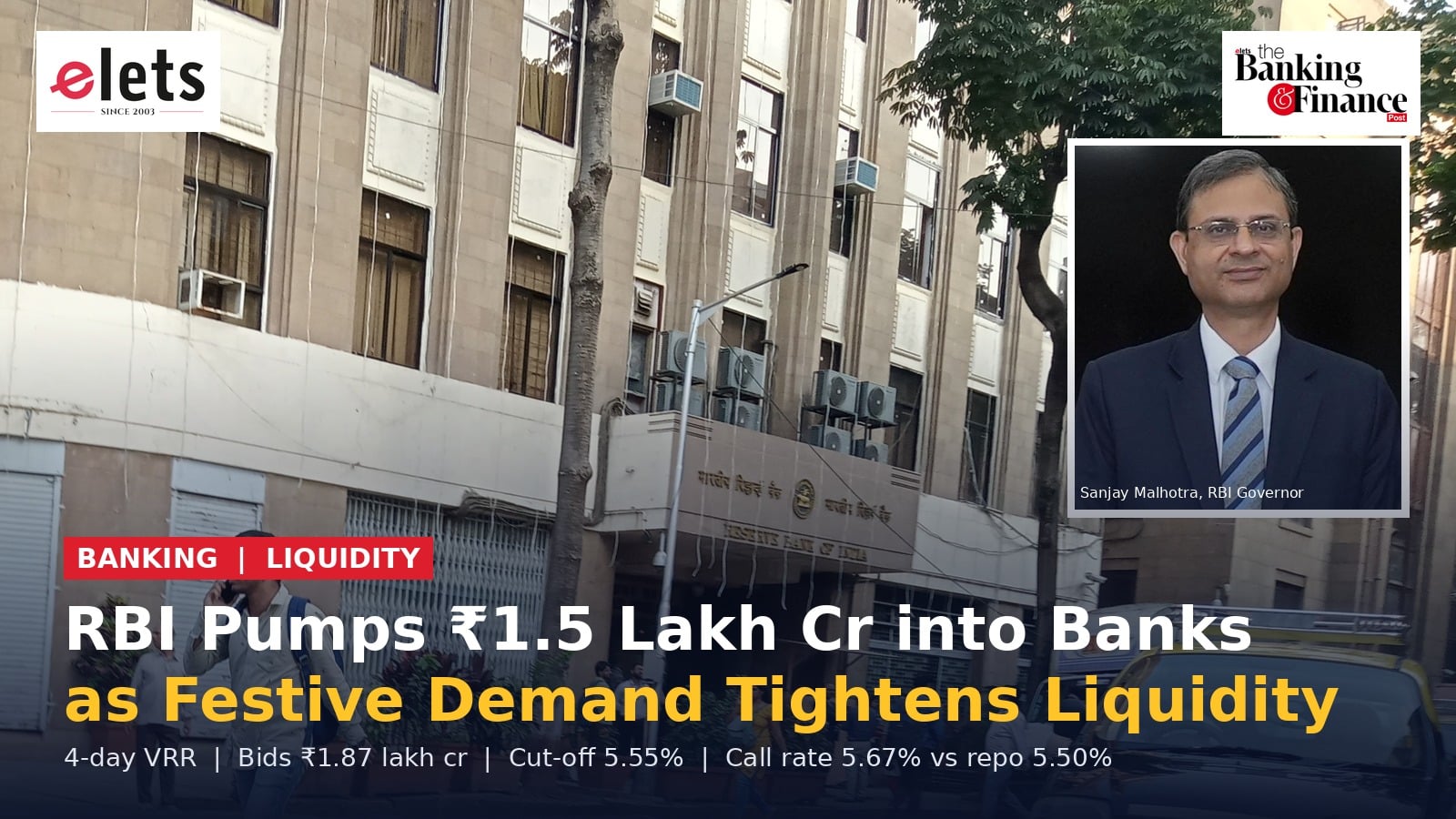


The Reserve Bank of India (RBI) has stepped up its support for the banking system as festive-season demand for cash and credit tightens liquidity. On Monday, 26 October 2026, the central bank allotted ₹1.50 lakh crore through a four-day Variable Rate Repo (VRR) auction, a week after it injected ₹1 lakh crore through a seven-day VRR operation, its first major liquidity infusion since July.
Strong demand at the auction
Banks bid ₹1.87 lakh crore in Monday’s auction, against the notified amount of ₹1.50 lakh crore. The RBI allotted ₹1,50,007 crore at a cut-off rate of 5.55%, with a weighted average rate of 5.59%. Bids at the cut-off received a partial allotment of about 85%. The funds will be repaid on 30 October 2026.

The earlier seven-day operation also drew bids well above the amount on offer, with banks seeking about ₹1.5 lakh crore against ₹1 lakh crore. Bids running ahead of supply in both auctions show that lenders need short-term funds.

Why liquidity has tightened
Only a few weeks ago the RBI was draining surplus liquidity from the system, which had built up after large foreign-exchange-related inflows. Since then, several outflows have come together. Tax payments, cash reserve ratio (CRR) requirements and a seasonal rise in cash withdrawals and credit demand during the festive period have all pulled money out of the banking system.
The pressure shows up in the overnight market. The weighted average call rate (WACR), the rate at which banks borrow from each other overnight, rose to about 5.67%, above the policy repo rate of 5.50%. When the call rate sits above the repo rate for a sustained period, short-term borrowing becomes costlier for banks, and the RBI usually steps in to bring the operating rate back towards its target.

What it means for banks and borrowers
Under a VRR, banks borrow from the RBI for a short period against government securities pledged as collateral. The operations give lenders money they can use immediately to meet festive credit demand and withdrawals, and they help prevent a sharp spike in money-market rates.
The infusion does not mean home loan or personal loan rates will fall right away. The operations manage day-to-day liquidity and are not a change in monetary policy. Treasury desks will watch how the RBI calibrates liquidity through the rest of the festive season and whether the call rate settles back near the repo rate.
A busy week for the central bank
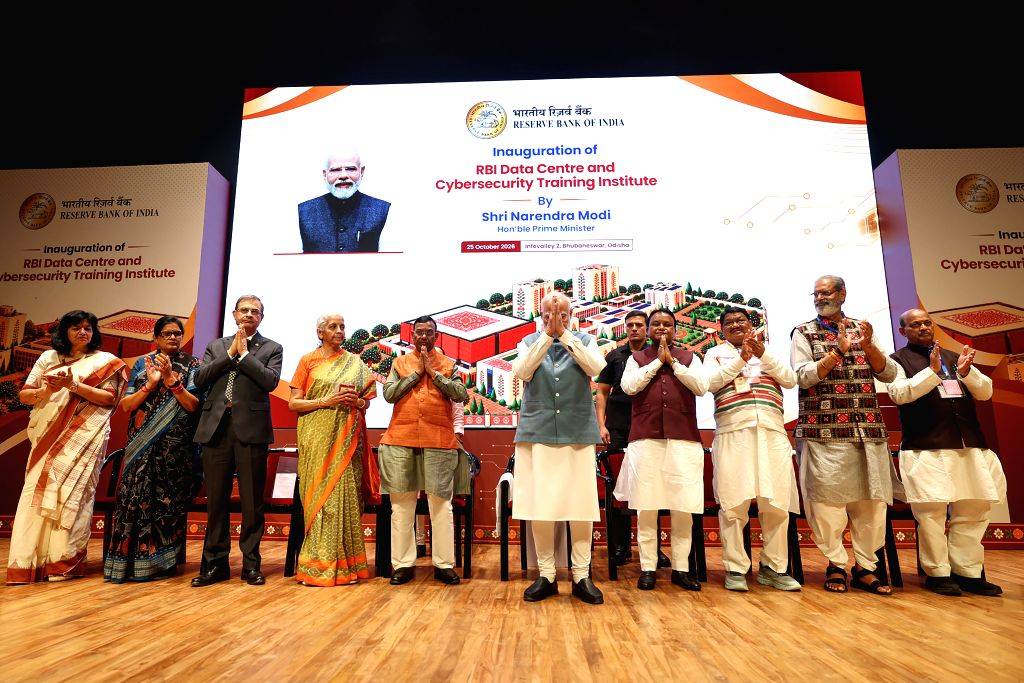
The liquidity support comes alongside other steps to strengthen the system. On 25 October, Prime Minister Narendra Modi inaugurated the RBI’s Data Centre and Cybersecurity Training Institute in Bhubaneswar, which will host critical platforms such as RTGS and NEFT. RBI Governor Sanjay Malhotra said the central bank remains committed to using emerging technologies, strengthening cybersecurity and building indigenous technology capabilities.
For banks heading into the peak of the festive season, the message from Mint Street is clear: the RBI is ready to supply short-term funds so that credit keeps flowing.