

The Reserve Bank of India (RBI) has eased Export Declaration Form (EDF) rules for services exporters through a notification dated 2 November 2026. Resident individuals such as freelancers and consultants will be deemed to have filed the EDF once they give their bank the payment details for a foreign inward remittance. The change applies retrospectively from 1 October 2026.
The amendment, titled the Foreign Exchange Management (Export and Import of Goods and Services) (Second Amendment) Regulations, 2026 (Notification No. FEMA 23(R)/(2)/2026-RB), changes the principal regulations notified on 13 January 2026. It comes weeks after the new framework for cross-border payments by Indian businesses left many small exporters unsure of what to file.

What the RBI EDF rules change
Under the FEMA framework that took effect on 1 October 2026, a services exporter had to submit an EDF within 30 days from the end of the month in which an invoice was raised. Authorised dealer (AD) banks used the declaration to record each export in the RBI’s Export Data Processing and Monitoring System (EDPMS) and track whether the money came in.

- Resident individuals: the RBI now defines a resident individual as a natural person resident in India. Such an exporter is deemed to have submitted the EDF when they give the AD bank the information it needs to credit the foreign payment to their account, with no value limit.
- Firms and other exporters: the same deemed filing applies when a single inward remittance is not more than ₹10 lakh or its equivalent in foreign currency.
- Imports of services: banks now need to enter import-of-service details in the Import Data Processing and Monitoring System (IDPMS) only for importers other than resident individuals, and only where the invoice or contract value is above ₹10 lakh.
Why freelancers and small exporters were stuck
The Hindu BusinessLine reported that, more than three weeks after the new rules began, individual service exporters were still unclear whether they had to file the EDF, a form that asks for detailed transaction information. Without a written clarification from the RBI, AD banks had taken different approaches, and most had not yet put out the standard operating procedures the regulator required.
The fix matters for India’s large base of freelancers, independent consultants and creators who are paid by overseas clients, and for the payment firms that serve them. Cross-border payment providers such as Skydo, which recently won final IFSCA authorisation in GIFT City for exporter accounts, build their onboarding around the paperwork banks ask for on each remittance.

What it means for cross-border payment fintechs
Deemed filing removes a separate form from the most common, low-value export flows, so collections platforms can settle smaller remittances with less manual follow-up. The change also lands as more fintechs build licensed rails for money moving in and out of India. Razorpay this week received its final IFSCA licence to run payments from GIFT City, while Xflow has launched a tool for Indian firms to pay global SaaS subscriptions.
The full text of the amendment is available on the RBI notification page.
Key takeaways
- Resident individuals exporting services are deemed to have filed the EDF once they give their bank the payment details, at any value.
- Other services exporters get the same relief for inward remittances of up to ₹10 lakh each.
- The amendment applies retrospectively from 1 October 2026, the date the new FEMA export rules began.
FAQ
Do freelancers still need to file an EDF with their bank?
No separate EDF is needed. A resident individual is deemed to have filed it once they give the authorised dealer bank the information required to credit the foreign payment.
Does the ₹10 lakh limit apply to individuals?
No. The ₹10 lakh per-remittance limit applies to exporters other than resident individuals, such as companies and partnership firms.
From when does the change apply?
The RBI made the amendment effective retrospectively from 1 October 2026.
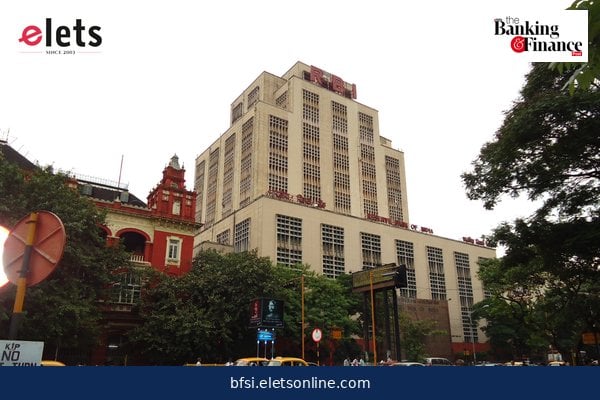
Featured image: Reserve Bank of India building in Kolkata. Photo: Kolkatan / Wikimedia Commons (CC BY-SA 3.0)