



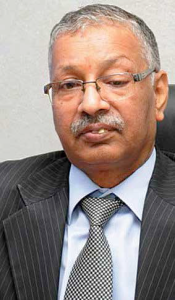
Jain Bhushan
General Manager, Bank of India – National Banking
Group – Jharkhand & Chattisgarh, General Manager
State Level Bankers Committee (SLBC)
“Reaching out to the villages with the population of less than 2,000 is a challenge in Jharkhand,” says Jain Bhushan. In conversation with Souvik Goswami & Kartik Sharma
Please tell us about the initiatives and objectives of the Bank of India in the state of Jharkhand.
Bank of India has been given the responsibility of convenership of State Level Bankers’ Committee in the state of Jharkhand from 1st April, 2013. We are the lead bank in the 15 districts, out of the 24 districts. We have a network of 432 branches in the state. Apart from these, we have ATM and Micro ATM network (already deployed 500 and another 500 to be deployed soon). We have also our own Business Correspondent (BC) network and also engaged with UTL for BC model in various Panchayats. They are all rendering financial services through the IT initiatives as part of financial inclusion.
I would like to mention that as on 31st March, 2013, number of villages which have got less than 2,000 population is 26,160, and they are uncovered in the state of Jharkhand.

So how do you want to reach these villages?
We have prepared a roadmap, as per, the RBI guidelines. According to this, 5 per cent of these villages would be covered by brick and mortar branches, and rest is to be covered in the way of BC and mobile-banking model. We have divided this into three year plan. About 12,000 villages to be covered by present financial year and another 12,000 are to be covered in the financial year 2014-15, and rest beyond 2015. So far we have covered about 7,600 villages as on 31st December, 2013. We are regularly monitoring the progress of covering all through these three modes. We know that covering villages with less than 2,000 population is a challenge.
There is problem in other states regarding attractive payments to the Business Correspondents. What is the scenario in Jharkhand in this context?
It was teething problem when we started as it was not that much remunerative. But now the scenario has been changed. We are emphasizing with all our branches and other banks to make this BC model a sustainable model and they should have a gainful employment and there should not be any attrition. So, we have been assigning various multiple jobs like account opening, recovery, micro insurance, and even paying them for AADHAR seeding process also. What I am trying to say is that we are utilizing whatever avenue is available to us to make BC model sustainable. Actually we have observed that there is not much problem when the BCs are appointed by banks. But this problem is there when the BCs are appointed by other agencies.
Another point, I would like to highlight is that when the AADHAR seeding process will be completed and various schemes will be rolled out in all the 24 districts, the volume of the business will also increase as there are large numbers of beneficiaries. This will also help us.

“Most of the commercial taxes are being collected through ICT and Bank of India is an important partner in this endeavor”
What are the steps being taken by the Bank of India in terms of ICT initiatives?
I think mobile banking will also become an important mode for banking in coming 2 to 3 years. There was some technical snag initially. But since October, 2013 we have rectified it, and we are aggressively following up with our branches to enroll as many as customers with mobile banking, including rural areas of the state. The reason is simple – everybody has got a mobile now.
Apart from this, we have entered into an agreement with the Government of Jharkhand regarding collection of the commercial task and portal is already being created. So most of the commercial taxes are being collected through ICT initiative and Bank of India is an important partner in this endeavor. We are also supporting government’s e-stamping initiative.
On the other hand, once the food security allocations are released again the volume will increase as almost 80 per cent of the population in the state is entitled for this.

What are your plans to overcome this challenge?
I think the best way is to penetrate through BC model. At present, we are planning that BCs should be covering more than 5 to 6 villages and beneficiaries should not be moving more than 3 to 4 kilometers. For this, we are providing alternative channel and we would also like to popularize more micro-ATM model. But the main hindrance is reaching the remote areas as 18 districts are LWE affected and it brings security risk. So, opening of the branches is a real problem, plus this connectivity problem. It is even difficult for us to operate a branch in these remote areas of Jharkhand. We are taking up this issue with the government.

Please share with us your vision regarding Bank of India’s operation in the state of Jharkhand.
We are leading in the state, and we are facilitating to the government as well as the banks being the SLBC convener, and we are catering to the need of our five zones in Jharkhand and one zone in Chhattisgarh. So, our role is both supplementary and complementary to our banks and to the state government also. Our technology is at par with others and it can be customised to any extent. In one line I can say Bank of India is a visible bank in the State of Jharkhand.