




Bajaj Finance Ltd, through Bajaj Finserv’s applied research initiative Finserv Intelligence, has invested about USD 2 million in Bengaluru-based Soket AI, an Indian research company building sovereign large language models. Pennant Technologies, a lending-technology firm in which Bajaj Finance has invested, put a further USD 2 million into the same round, taking the total to about USD 4 million, the companies said on 18 November 2026.
The deal links one of India’s largest non-bank lenders directly to homegrown foundation-model research. It builds on Bajaj Finance’s wider technology programme, including its core lending transformation with Pennant Technologies, and on the group’s AI push in lending during H1 FY27.

What the Bajaj Finance Soket AI deal covers
According to the Bajaj Finserv press release, the money will support Soket AI’s work on indigenous AI for uses where data security, reliability and technological sovereignty are critical. Beyond capital, the partnership is expected to open up applied AI research, enterprise applications and capability building that combine Bajaj Finance’s industry experience with Soket AI’s research.

- Bajaj Finance: about USD 2 million, routed through Finserv Intelligence.
- Pennant Technologies: USD 2 million in the same round.
- Soket AI: supported by the Government of India’s IndiaAI Mission; founded in 2019 and led by Founder and CEO Abhishek Upperwal.
Project EKA and what it means for lenders
Soket AI’s flagship programme, Project EKA, recently produced EKA-1, a 26-billion-parameter foundation model focused on maths, code and reasoning. The roadmap aims at much larger models and is planned to support more than 100 languages, including Indian and Global South languages. The company says the models are built to run in secure, controlled settings, including on-premises infrastructure. Soket AI has also released Loop, an open-source agentic harness for long-running tasks.
For Pennant, the tie-up is about banking use cases. Pennant said the two companies will develop and evaluate Soket’s models, agentic harness and inference runtime for its banking agents, document processing and collections intelligence, and intend to jointly build banking-specific language models and AI agents for KYC, onboarding, collections, compliance and fraud detection. That fits a wider industry trend in which collections is emerging as an early test of agentic AI in BFSI.

Why sovereign AI matters for financial services
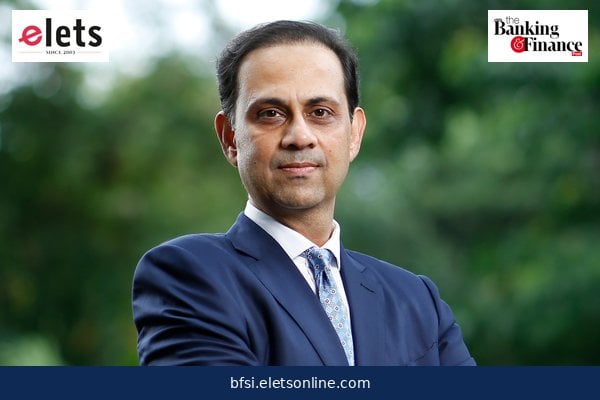
Sanjiv Bajaj, Chairman and Managing Director, Bajaj Finserv Ltd, said that as AI becomes integral to critical information infrastructure in sectors such as financial services, “the margin for error must be minimal”, and that such systems must be “reliable, secure, auditable” and able to operate within trusted environments.
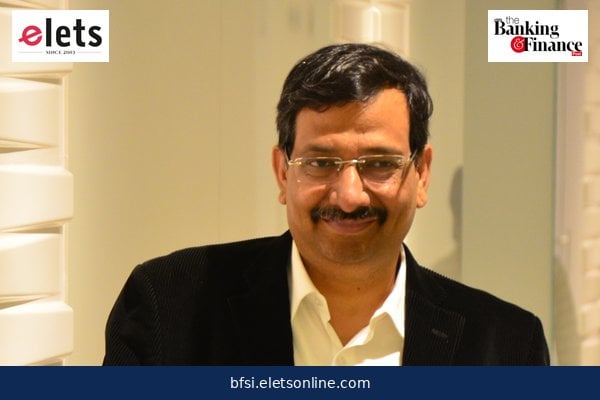
Rajeev Jain, Vice Chairman and Managing Director, Bajaj Finance Ltd, said Soket AI’s reasoning-led models “can make advanced AI economically viable for financial services” while allowing the lender to deploy AI within its own infrastructure, with full control over data. He added that Soket AI’s depth in Indian languages could help Bajaj Finance serve customers in the language they are comfortable with.
The emphasis on control echoes a broader shift. Banks and NBFCs are moving from pilots to production as AI becomes the operating layer for India’s banks and NBFCs, while concerns over model security have also driven deals such as Protectt.ai’s stake in AIShield to secure AI in banking apps.
Key takeaways
- Bajaj Finance and Pennant Technologies invested a combined USD 4 million in Soket AI on 18 November 2026.
- Soket AI, backed by the IndiaAI Mission, builds the EKA family of sovereign foundation models that can run on-premises.
- Pennant plans banking-specific models and AI agents for KYC, onboarding, collections, compliance and fraud detection.
Featured image: Sanjiv Bajaj, Chairman and Managing Director, Bajaj Finserv. Photo: Sanjiv Bajaj via Wikimedia Commons (CC BY 2.0).