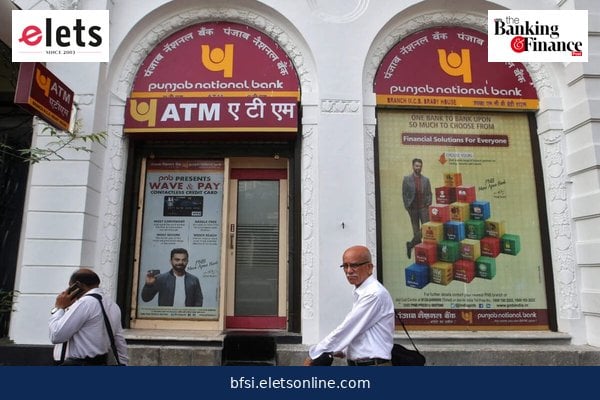


Punjab National Bank (PNB) and Deutsche Bank AG have signed a memorandum of understanding (MoU) to work together on acquisition financing for clients in India, the state-owned lender said in a stock exchange filing on 25 November 2026. The PNB Deutsche Bank acquisition financing pact makes PNB the third large public sector bank to team up with a global lender since the Reserve Bank of India (RBI) opened acquisition finance to domestic banks.
The deal adds a new corporate banking line for PNB, which recently set a target to bring its cost-to-income ratio below 50% this fiscal.
What the PNB and Deutsche Bank MoU covers
According to PNB’s Regulation 30 disclosure to the NSE, the MoU sets up a framework for cooperation in facilitating acquisition financing. The two banks will explore deals through several modes, depending on what each client needs:

- Underwriting and arrangement of acquisition loans
- Participation and syndication in larger deals
- Referral and facilitation of transactions
Both lenders said they will follow applicable regulations and keep their own credit, risk and governance processes. Each bank will take its own decision on every transaction.
The MoU was signed in the presence of Ashok Chandra, MD and CEO of PNB, and Kaushik Shaparia, CEO of Deutsche Bank Group for India and Emerging Asia. Biswajit Mohanty, General Manager, signed for PNB, while Anuj Agrawal, Managing Director, and Devesh Malviya, Head of Credit Sales at Deutsche Bank AG’s Mumbai branch, represented the German lender, CNBC-TV18 reported.
What PNB and Deutsche Bank leaders said
“This collaboration with Deutsche Bank marks an important step towards exploring new opportunities in acquisition financing. By leveraging our respective strengths and capabilities, we aim to facilitate tailored financing solutions for clients while strengthening our presence in the corporate banking ecosystem,” said Ashok Chandra, MD and CEO, PNB.
“India is a strategically important market for Deutsche Bank. As a Global Hausbank, we see considerable opportunity to support Indian companies as they grow in scale, pursue their strategic ambitions and deepen their connections to global markets,” said Kaushik Shaparia, CEO, Deutsche Bank Group, India & Emerging Asia.
Deutsche Bank has been expanding in India for some time, including a ₹5,110 crore capital infusion into its Indian operations.
Why acquisition financing matters for Indian banks
RBI’s acquisition financing norms came into effect on 1 July. They let banks fund up to 75% of the acquisition value, with the acquirer bringing in the remaining 25%. Listed and unlisted non-financial companies, their subsidiaries and special purpose vehicles can raise this finance, subject to eligibility conditions. A bank’s acquisition finance exposure is capped at 20% of its eligible capital base, within the overall capital market exposure limit, Business Standard reported.
PNB follows two other state-run lenders. State Bank of India has a strategic partnership with Japan’s MUFG Bank covering mergers and acquisitions, aviation and real estate, and has a lending capacity of about ₹94,000 crore under the new norms. Bank of Baroda has partnered with Mizuho Bank on acquisition financing, M&A advisory, structured lending and cross-border deals. Japanese lenders have been active in India’s financial sector, as the MUFG–Shriram Finance deal showed.
For PNB, foreign partners bring global deal networks and structuring experience, while the Indian bank brings balance sheet strength and a wide domestic client base. The tie-up comes as PNB also invests in retail, including its next-gen digital banking branch for youth in Delhi.
Key takeaways
- PNB and Deutsche Bank AG signed an MoU on 25 November 2026 to cooperate on acquisition financing in India.
- Modes include underwriting, arrangement, participation, syndication, referral and facilitation.
- RBI norms let banks fund up to 75% of an acquisition’s value, capped at 20% of a bank’s eligible capital base.
- PNB joins SBI (with MUFG Bank) and Bank of Baroda (with Mizuho Bank) in tying up with a global lender.
Sources: PNB disclosure to NSE (25 November 2026); Business Standard; CNBC-TV18; The Economic Times.