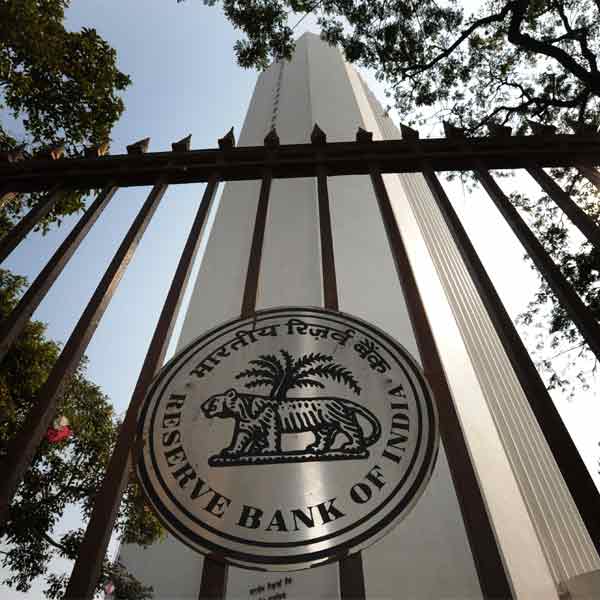


 The Reserve Bank of India (RBI) released the Financial Stability Report (FSR) June 2015, the eleventh issue of its half yearly publication.
The FSR reflects the collective assessment of the Sub-Committee of the Financial Stability and Development Council (FSDC) on risks to financial stability, as also the resilience of the financial system. Besides, the Report discusses issues relating to development and regulation of the financial sector.

Highlights:

Global environment
Global economic recovery still seems to be far from being self-sustaining even as spill-overs from the monetary policy stance in advanced economies (AEs) are increasing the challenges for emerging market and developing economies (EMDEs). Developments on the Greek debt crisis front and uncertainty over the timing of rate increases by the US Federal Reserve remain immediate possible triggers for global financial market volatility.

On domestic front
On the domestic front, there has been significant improvement in the macroeconomic environment and going forward, economic performance is expected to be better. External vulnerability has reduced and progress has been made with regard to fiscal consolidation. While foreign portfolio flows to India have been strong during the past year, unexpected changes in AE monetary policy may lead to slowdown/reversal of such flows with implications for segments of financial markets. India is though better prepared to deal with the volatility, as compared to previous episodes.
Banking sector
While risks to the banking sector, as reflected by the Banking Stability Indicator and Map, have moderated marginally since September 2014, concerns remain over the continued weakness in asset quality indicated by the rising trend in stressed advances ratio of scheduled commercial banks (SCBs), especially of public sector banks (PSBs). Macro stress tests suggest that current deterioration in the asset quality of SCBs may continue for few more quarters, and PSBs may have to bolster their provisions for credit risk from present levels, to meet the ‘expected losses’ if macroeconomic environment were to deteriorate under assumed stress scenarios. However, capital to risk weighted assets ratio (CRAR) of SCBs, at system level, was observed to remain above the regulatory minimum even under adverse macro-economic conditions assumed in these tests.
The falling profit margins and decreasing debt repayment capabilities of the corporate sector add to these concerns, though overall leverage level in Indian economy is comfortable when compared to other jurisdictions.
While the regulatory move towards encouraging greater market access and market discipline will help the development of domestic financial markets, the banking sector, especially the PSBs will be expected to continue to shoulder the needs of the accelerating growth in the economy. In this context, the policy initiatives for improving the governance and management processes at public sector banks become significant.
Securities and commodities markets
The concerns emanating from rapid rise in algorithm trading in recent years highlight the need for caution for India’s securities markets, while measures have been taken to address the same. Significant steps have been taken to tighten the regulations dealing with illegal money-raising activities and insider trading, and also to strengthen the risk management systems at depositories.
The agricultural insurance needs urgent focus in the wake of frequent episodes of weather related calamities and their impact, particularly on small and marginal farmers. On the other hand, there is a need to harmonise the regulation of physical commodities market and strengthening the linkages between the derivatives markets and physical (cash) markets, mainly in agricultural commodities.
The expected shifts in demography in coming decades call for attention on old age income security and pension schemes, especially in the case of unorganised sector for which a new scheme has been announced by the union government.
Overall, India’s relatively stronger macroeconomic fundamentals in terms of growth, inflation, current account and fiscal deficits provide a reasonable degree of resilience to Indian financial system in the event of spill-over effects from global factors. However, with the continued uncertainty over global growth and in the absence of effective international monetary policy coordination, there can be no room for complacency.