

Large non-banking financial companies (NBFCs), including Bajaj Finance and Tata Capital, are rolling out and testing term-loan alternatives to flexi loans and other revolving credit lines from November 2026, as the Reserve Bank of India (RBI) shows no sign of softening its proposed ban on revolving credit by NBFCs, Mint reported on 4 November 2026.
Revolving lines let a borrower draw, repay and draw again up to a sanctioned limit, and are common in app-based lending to small businesses. NBFCs already account for 47% of new-to-credit consumer originations, so any change to how they structure credit reaches a large share of first-time borrowers.

What the RBI revolving credit draft proposes
On 6 August 2026, the RBI released the draft Reserve Bank of India (Non-Banking Financial Companies – Credit Facilities) Amendment Directions, 2026. The RBI draft says an NBFC “shall only offer credit products which are in nature of term loans and shall not offer any revolving credit products”.

- Term loan: a fixed principal amount, disbursed in one or more instalments and repaid on a set schedule or as a bullet payment.
- No replenishment: once repaid, in part or in full, the sanctioned limit cannot be restored.
- Revolving credit: any fund-based facility that does not meet the term-loan definition.
- Exemption: NBFCs authorised by the RBI to issue credit cards.
- Timing: the changes take effect immediately once notified. Comments closed on 28 August 2026.
Why the RBI is holding firm
Industry bodies sought exemptions for micro, small and medium enterprise (MSME) products such as supply-chain finance and invoice discounting. RBI Governor Sanjay Malhotra, however, said on 7 October that the framework was not a new restriction, but a clarification that NBFCs had never been allowed to offer such loans. He added that digital technology had let NBFCs offer revolving credit in the guise of term loans, according to Mint.
That comment points directly at digital lending, where an app can turn a sanctioned limit into a reusable credit line. Experts quoted by Mint said smaller fintech and digital lenders that focus mainly on MSME finance could feel the impact more than large, diversified NBFCs.

How Bajaj Finance and Tata Capital are adapting
On its second-quarter FY27 earnings call, Bajaj Finance Vice Chairman and Managing Director Rajeev Jain said the lender would launch “a set of different variants of term loans on 1st of November” that do not allow withdrawals but carry other features. He said a complete ban would have a transient impact on assets under management (AUM) and marginally compress margins and profitability. IIFL Capital estimates revolving products at about 15% of Bajaj Finance’s consolidated AUM, ETBFSI reported. The group is also leaning on technology, with Bajaj Finserv’s AI push driving ₹6,500 crore of loans in H1 FY27.
Tata Capital Managing Director and CEO Rajiv Sabharwal said the company was already testing some alternative products and would begin testing the rest in early November. He estimated the impact at 3–4% of its loan book, with flexi loans making up about 2–2.5%. The lender recently reported a 51% rise in Q2 FY27 profit as its loan book crossed ₹3 trillion.
Kotak Institutional Equities has named Bajaj Finance, Aditya Birla Capital and Tata Capital as the most exposed lenders, while Fitch Ratings told Mint the overall impact on NBFC portfolios may not be significant.
What it means for fintech lenders and borrowers
For fintech platforms that partner with NBFCs, the likely outcome is a redesign of credit-line products into fixed-amount loans, with fresh sanctions instead of automatic top-ups. Borrowers used to flexi loans that work like an overdraft may need new approvals each time they need funds. NBFCs argue this could push some underserved borrowers towards informal credit, while banks expect part of the demand to move to them.
Key takeaways
- The RBI’s 6 August 2026 draft would restrict NBFCs to term loans, exempting only credit-card issuers.
- Bajaj Finance planned term-loan variants from 1 November; Tata Capital is testing alternatives this month.
- Smaller digital and MSME-focused lenders may be hit harder than large NBFCs, experts told Mint.
FAQ
Has the RBI ban on NBFC revolving credit taken effect?
Not yet. The RBI issued a draft on 6 August 2026 and closed comments on 28 August. The rules will apply immediately once the final directions are notified.
Which products are affected?
Any NBFC credit line that can be redrawn after repayment, such as flexi loans and some supply-chain finance lines. Credit cards issued by RBI-authorised NBFCs are exempt.
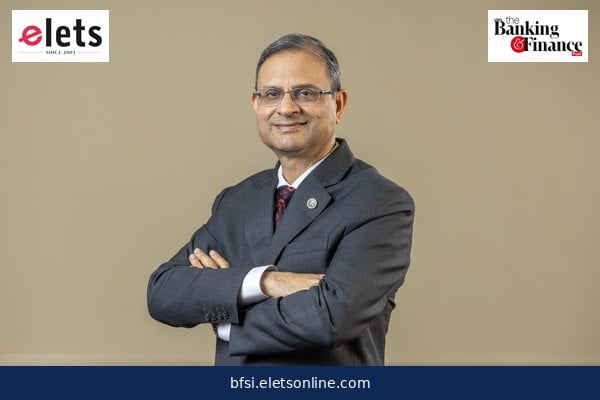
Featured image: RBI Governor Sanjay Malhotra. Photo: Reserve Bank of India media kit.