


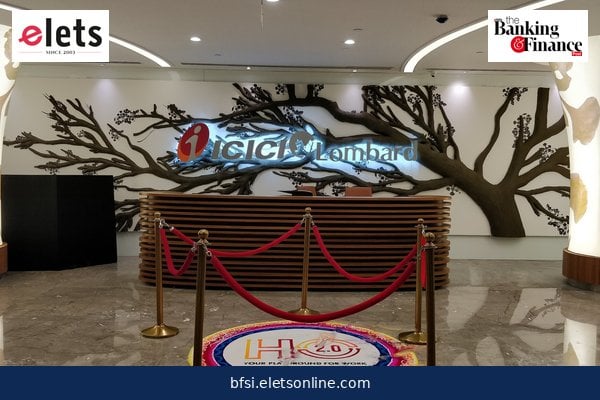


ICICI Lombard General Insurance has moved most of its health insurance underwriting to an artificial intelligence engine, with panel doctors reviewing the machine’s output, and its agency channel now runs entirely on an AI bot. Girish Sehgal, Chief of Health Underwriting and Claims, Customer Service and Operations at the insurer, told The Insurance Reporter that the shift has lowered servicing costs while keeping customer satisfaction scores high.
The move puts one of India’s largest private general insurers among the frontrunners of AI in insurance, at a time when the regulator is pressing the industry for faster, more transparent health claims.

How ICICI Lombard’s AI health underwriting works
Proposals that qualify for straight-through processing are cleared automatically. Every other applicant receives a link, and the AI engine then runs the medical questioning itself. Each follow-up question adapts to the previous answer, so the process feels like an assisted conversation rather than a fixed form. A typical session lasts seven to ten minutes and is automated end to end.

- Risk scoring: the engine grades each applicant as high, medium or low risk.
- Doctor review: low and medium-risk proposals move ahead after a panel doctor checks the AI’s output.
- Manual route: high-risk cases go to underwriters, who can ask for extra tests, fresh reports and documents.
- Audit trail: a transcript of the conversation is emailed to the applicant, which Sehgal said helps prevent mis-selling and disclosure disputes at claim time.
AI call centre and an estimated ₹17 crore saving
The insurer’s contact centre handles six to seven lakh customer queries a month across calls, email and chat. When ICICI Lombard began digitising these journeys, about 20% were digital and 80% manual. That split has now flipped, with digital engagement at roughly 71–75%, or more than 40 lakh interactions a year.
Sehgal estimated that a manual call costs about ₹50, so the same volume handled by people would cost around ₹20 crore a year. Digital servicing, including telephony and WhatsApp charges, costs no more than ₹3 crore, which puts the potential annual saving at about ₹17 crore. This is an estimate of cost avoided rather than a separately reported figure. Net Promoter Scores remain at 70 to 75, he said, and staff freed from the call centre have moved into claims, sales and operations.

Fraud detection, weather alerts and faster claims
On insurance fraud detection, ICICI Lombard has moved from a machine learning model to an AI model, and Sehgal said its ability to catch fraudulent claims has risen several times over. The insurer has also combined its AI engine with satellite feeds in an Automated Weather Alert System (AWAS) that warns businesses about cyclones, floods and other severe weather.
For claims, the app now accepts document uploads, removing courier movement. Sehgal said customers increasingly expect a discharge decision within 15 minutes to an hour, well ahead of the regulator’s three-hour limit, and admitted the company has not fully met that expectation yet. Its core systems run on the cloud, and he expects three to four years of technology investment to show up in returns and efficiency over the next six to twelve months.
Why it matters for India’s insurance sector
Health claims handling is under close regulatory watch. The Insurance Regulatory and Development Authority of India (IRDAI) recently imposed a ₹2 crore penalty on Star Health over claim rejections and deductions, and its chairman has said nearly 85% of insurers now use AI while cautioning that humans must stay in charge of critical decisions. ICICI Lombard’s model, where doctors review AI underwriting and high-risk cases stay with people, reflects that balance.
The insurer has been building its distribution and digital reach for some time, including its tie-up with Policybazaar to widen access to cover. With underwriting, servicing and fraud checks now AI-led, the next test will be whether faster decisions translate into the claims experience policyholders want.