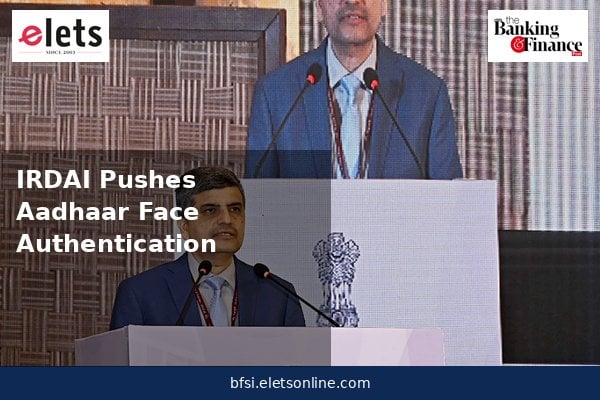


The Insurance Regulatory and Development Authority of India (IRDAI) on 2 November 2026 urged all insurers to adopt Aadhaar face authentication and integrate DigiLocker into their workflows, at a workshop for Chief Compliance Officers at its Hyderabad head office. Insurers were also told to keep online buying journeys free of dark patterns.
IRDAI Chairman Ajay Seth inaugurated the session alongside Saurabh Vijay, Chief Executive Officer of the Unique Identification Authority of India (UIDAI). In his keynote, Seth asked the industry to use Aadhaar authentication services and to ensure that digital practices stay transparent and fair. The push builds on UIDAI’s recent work to simplify Aadhaar face authentication with a new SDK and sandbox.

Why IRDAI wants Aadhaar face authentication in insurance
UIDAI officials took compliance heads through face, biometric and OTP-based authentication methods. Face authentication was singled out because it includes liveness detection and works on an ordinary mobile phone, at any time and from any location.

According to the session, Aadhaar-based onboarding makes the process faster and paperless, improves data accuracy and reduces the risk of fraud. Use cases shown ran across the policy lifecycle, from customer onboarding to claims settlement. UIDAI also stressed that authentication must be done only through UIDAI, which it called the single source of truth.
- Methods covered: face, biometric and OTP-based authentication.
- Recommended option: face authentication with liveness detection on mobile.
- Use cases: onboarding, KYC, servicing and claims settlement.
DigiLocker and Entity Locker across the insurance value chain
Officials from the National e-Governance Division (NeGD) under the Ministry of Electronics and Information Technology (MeitY) presented how DigiLocker and Entity Locker can be used across insurance products and processes, letting insurers pull verified documents instead of collecting paper copies. The theme echoes the wider shift seen in Aadhaar-based digital signing for banks and NBFCs.

What insurers were told about dark patterns
R. K. Sharma, Executive Director, IRDAI, led the session on dark patterns, covering the Guidelines for Prevention and Regulation of Dark Patterns, 2023, notified by the Central Consumer Protection Authority (CCPA). Insurers were told not to force website visitors to share personal details, such as a mobile number, just to view product information or generate a quote.
The session named transparent disclosures, fair choice architecture and purpose-specific consent as the pillars of a trustworthy digital insurance ecosystem. That consent focus lines up with the data protection work lenders are doing under the DPDP Rules, as seen in the launch of consent management platforms for BFSI compliance.
Why it matters for insurers
The workshop comes in a busy month for the regulator, which has also declared November as Grievance Resolution Month for insurers. Together, the moves signal that IRDAI wants faster, paperless onboarding to come with stronger consent, fraud controls and fair online design.
Key takeaways
- IRDAI asked insurers to adopt Aadhaar authentication, especially face authentication with liveness detection.
- Insurers should integrate DigiLocker and Entity Locker for verified documents.
- Websites must not demand personal details such as a mobile number before showing quotes or product information.
FAQ
What is Aadhaar face authentication?
It is a UIDAI service that verifies a person’s identity by matching a live face capture on a phone with Aadhaar records, with liveness detection to block spoofing.
What are dark patterns in insurance?
They are misleading online design practices, such as forcing users to share a mobile number before seeing a quote, which the CCPA’s 2023 guidelines prohibit.
Sources: Insurance Regulatory and Development Authority of India and Unique Identification Authority of India.
Featured image: Ajay Seth, Chairman, IRDAI. File photo: Press Information Bureau (GODL-India), via Wikimedia Commons