

The Maharashtra government will pay tribal welfare assistance under its Nucleus Budget scheme in the digital rupee from 1 April 2027, replacing direct bank transfers. Guidelines issued by the state Tribal Development Department on 19 November 2026 lock each sanctioned amount, up to ₹50,000 per person or ₹7.5 lakh per group, in a Punjab National Bank e₹ wallet.
The money can be spent only at registered vendors on approved purchases. It cannot be withdrawn as cash or moved to another account. The move puts a state welfare scheme on programmable central bank digital currency (CBDC), something RBI Governor Sanjay Malhotra urged states to do when he pressed state finance secretaries to use programmable CBDC for benefit transfers in October.

How the Maharashtra digital rupee payments will work
Beneficiaries first register on the Nucleus Budget portal. Once an application is approved, the sanctioned amount is credited as a locked balance in the beneficiary’s digital rupee wallet. Smartphone users will need Punjab National Bank’s Digital Rupee app, while those without smartphones can pay through an OTP-based facility instead of using the app.

- The beneficiary picks a registered vendor and pays by scanning the vendor’s QR code.
- The vendor must upload the purchase invoice and a photo of the beneficiary receiving the goods.
- After verification, 80% of the amount is released to the vendor.
- The remaining 20% is paid after 10 days if neither the beneficiary nor the Tribal Development Inspector raises a written objection.
Where technical problems stop the new system, the current bank transfer route can continue until 31 March 2027.
What the Nucleus Budget scheme covers
The Nucleus Budget is a flexible fund for needs of tribal communities that regular schemes do not cover. The revised guidelines fund traditional occupations, farming, self-employment, machinery and the collection, storage and processing of minor forest produce such as mahua, tendu, hirda, behda and honey.

General Scheduled Tribe beneficiaries get an 85% subsidy on livelihood activities and pay the other 15%. The state bears the full cost for Particularly Vulnerable Tribal Groups, Pardhi beneficiaries under the Pardhi package and women covered by the Rani Durgavati Tribal Women Empowerment Scheme.
Why programmable CBDC matters for banks
For banks, the scheme is a large real-world test of purpose-bound money. The Reserve Bank of India’s digital rupee FAQ already lists government benefit payments as a use case for programmable CBDC. Banks have been expanding e₹ features, from Indian Overseas Bank’s UPI-interoperable digital rupee app to HDFC Bank’s CBDC-enabled SmartGateway for merchants.
Retail use has been slow. RBI data shows retail CBDC in circulation fell to ₹771.66 crore in FY26 from ₹1,016.5 crore a year earlier. A state-run scheme with locked wallets, QR acceptance and staged vendor settlement could give PNB and the e₹ network steady, rule-bound transaction volume. PNB has also been adding new channels, including its next-gen digital banking branch for young customers in Delhi.
Safeguards and concerns
The department has tightened monitoring. At least 5% of individual cases will be physically inspected at random, along with every group case, and additional commissioners must inspect at least 10% of schemes each year.
Critics are worried about access. Social activist Ulka Mahajan said weak internet connectivity in remote areas could push beneficiaries towards agents and middlemen, as reported by Hindustan Times. Details of the scheme are published by the Maharashtra Tribal Development Department.
Key takeaways
- Maharashtra will move Nucleus Budget tribal aid from bank transfers to locked digital rupee wallets from 1 April 2027.
- Funds work only at registered vendors, with 80% paid after verification and 20% after a 10-day objection window.
- The scheme runs on Punjab National Bank’s Digital Rupee app, with an OTP option for people without smartphones.
FAQ
When does the digital rupee system start for the Nucleus Budget scheme?
It takes effect on 1 April 2027. Bank transfers can continue until 31 March 2027 in areas with technical difficulties.
Can beneficiaries withdraw the digital rupee as cash?
No. The sanctioned amount is locked in the wallet and can only be paid to registered vendors for approved purchases.
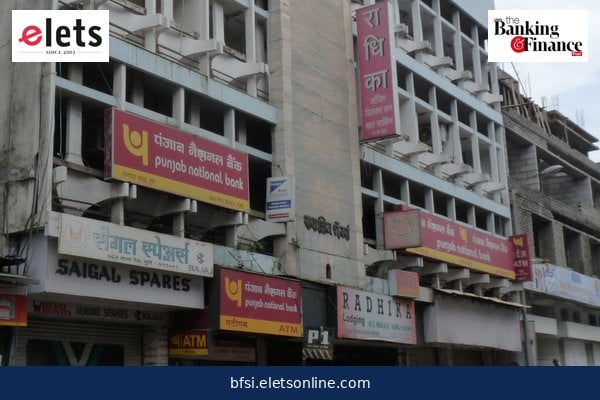
Featured image: Punjab National Bank branch and ATM signage. Photo: Sahilsheth15 via Wikimedia Commons (CC BY-SA 3.0).