

The Reserve Bank of India (RBI) on 27 November 2026 issued the Reserve Bank of India (White Label ATM Operators) Directions, 2026, bringing its rules for non-bank ATM operators into one rulebook with immediate effect. The RBI white label ATM directions keep the ₹100 crore net worth requirement and the push to deploy machines in semi-urban and rural India.
White label ATMs (WLAs) are cash machines set up, owned and run by non-bank companies rather than banks. The directions replace 11 circulars and guidelines issued since June 2012, and sit alongside the RBI card payment directions issued the same day, part of the central bank’s wider effort to consolidate payments regulation.
What the RBI white label ATM directions require
According to the RBI notification (RBI/DPSS/2026-27/479), issued under the Payment and Settlement Systems Act, 2007, White Label ATM Operators (WLAOs) must:

- Get authorised first: seek RBI authorisation under the Master Direction on Authorisation to operate a Payment System dated 15 June 2026, and start operations only after approval.
- Hold capital: maintain a net worth of at least ₹100 crore at all times, based on the last audited balance sheet.
- Favour smaller towns: keep a deployment ratio of at least 1:2:3 across metro or urban, semi-urban and rural centres, which the RBI will review at least once every six months.
- Build new, not buy: operators may not take over ATMs run by banks.
- Secure every machine: all WLAs must process EMV chip and PIN cards.
What it means for ATM users
WLAs cannot charge bank customers directly. Operators earn a fee from banks for the use of their machines, and transactions at WLAs count towards the monthly free ATM transactions a customer gets at other banks’ ATMs. WLAs must accept domestic and international credit, debit and prepaid cards issued under authorised card networks.
The directions also allow WLAs to offer interoperable cardless cash withdrawal, where UPI is used to authorise the customer and settlement runs through the National Financial Switch or ATM networks, with the same withdrawal limits as regular ATM withdrawals. Bill payments and interoperable cash deposits are permitted subject to technical feasibility and certification by the National Payments Corporation of India (NPCI). For failed transactions at a WLA, the customer’s issuing bank is primarily responsible for resolving complaints, with the sponsor bank required to support it.
Cash supply and sponsor bank rules
Operators can work with more than one sponsor bank, provided each is a member of an RBI-authorised ATM or card network and of RTGS. For cash, WLAOs may tie up with any scheduled bank, including cooperative banks and regional rural banks, rather than relying only on the sponsor bank. They may also buy wholesale cash directly from RBI issue offices and currency chests in lots above 1 lakh pieces of any denomination, against full payment.
Banks and WLAOs may enter co-branding arrangements, but the operator’s name must stay larger and more prominent than the partner bank’s on the main signboard. Operators must file monthly WLA statistics (return R330) on the RBI’s CIMS portal by the seventh day of the following month.
Why it matters for ATM operators and fintechs
The directions largely carry forward earlier instructions rather than adding new burdens, but a single document makes compliance simpler for operators, sponsor banks and the technology firms that run ATM networks. The sector has seen consolidation, including the RBI-approved sale of Tata Communications’ ATM business to Findi. The rulebook also lands as credit card spends overtake ATM withdrawals, putting more weight on rural reach and UPI-linked services for ATM operators. Non-bank payment operators already face separate RBI cyber resilience rules for non-bank PSOs.
FAQ
What is a white label ATM?
It is an ATM set up, owned and operated by an RBI-authorised non-bank company instead of a bank.
Can white label ATMs charge customers a fee?
No. WLAs cannot charge bank customers directly, and their transactions count within the monthly free ATM transaction limit.
When do the RBI white label ATM directions take effect?
Immediately, from their issue on 27 November 2026.
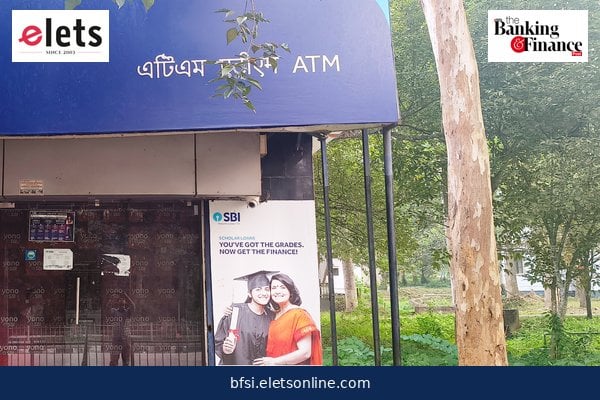
Featured image: SBI ATM kiosk at Gauhati University, Assam. Photo: BhuyanBhaskar / Wikimedia Commons (CC0)