




Mumbai, September 8, 2026: The Global Fintech Fest (GFF) 2026 opened in Mumbai, bringing together policymakers, regulators, central bankers, financial institutions, fintech companies, technology leaders, investors, founders, innovators, academia and other stakeholders to deliberate on the future of finance and the potential of emerging technologies to create large-scale impact.
Held under the theme “Potential to Impact,” the festival is exploring the evolving fintech landscape, including Agentic AI, tokenisation, quantum technologies, localisation, commerce and connected global systems for inclusive finance. The 2026 edition is expected to bring together more than 100,000 delegates, 8,000 participating institutions, 200+ speakers, 500+ investors, 5,000+ startups, 450+ sessions, 350+ exhibitors and 200+ product launches, making it one of the largest global gatherings of the fintech ecosystem.

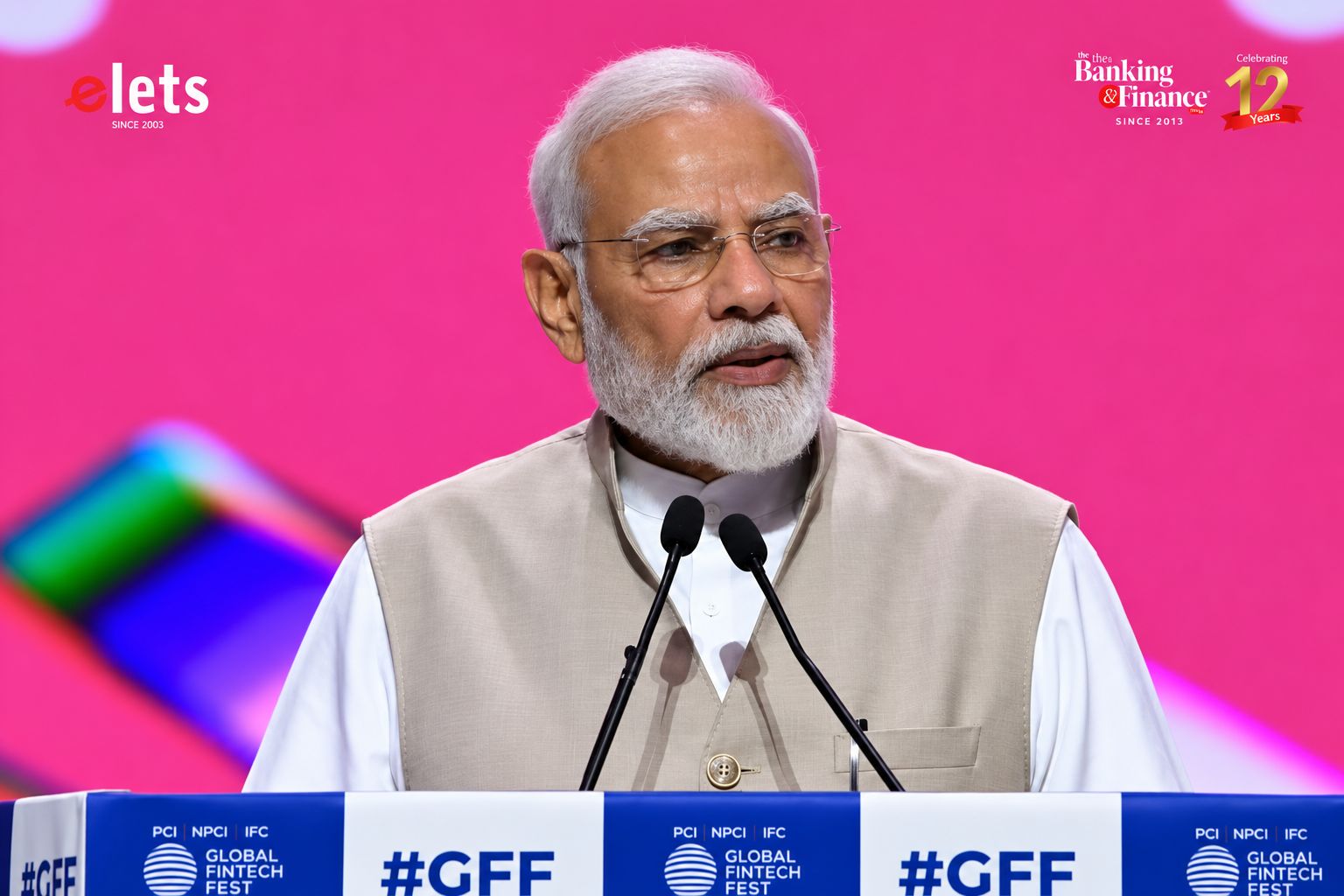
The occasion is particularly significant as UPI completes 10 years, marking a decade of India’s transformation in digital payments and financial inclusion. Prime Minister Narendra Modi attended the Global Fintech Fest for the third consecutive year and, for the first time, inaugurated the festival.
PM Modi: UPI’s Global Expansion Is Only the First Step
In his inaugural address, Prime Minister Narendra Modi congratulated the fintech community and welcomed delegates from India and across the world.
Reflecting on his participation in the Global Fintech Fest for the third consecutive year, the Prime Minister said the growing presence of young people, energy, possibilities and risk-taking capacity at the festival had strengthened his confidence in the future of fintech and India.

He also placed India’s fintech growth against the backdrop of global conflict, uncertainty and pressure on energy and commodity supply chains. Despite these challenges, he said India’s 7.8 per cent growth during the April-June quarter provides a new sense of confidence to the world.
The Prime Minister highlighted India’s growing global economic credibility and said the country’s growth momentum, macroeconomic stability and structural reforms were strengthening international confidence in India.
Turning to UPI, Prime Minister Modi said the digital payment platform had become a defining part of India’s fintech transformation as it completed its first decade.
He noted that UPI recorded more than 2,400 crore transactions in August alone, demonstrating the scale at which digital payments have become embedded in everyday life.
He recalled that a decade ago, the idea of having banking services at one’s fingertips appeared impossible to many. Today, millions of Indians who had historically remained outside the formal banking system have become important drivers of India’s fintech growth.
The Prime Minister also highlighted the international expansion of UPI, noting that it is now live in 11 countries.
However, he stressed that this is only the beginning.
“आज हमारा UPI कई देशों में पहुँचा है, लेकिन ये first step है। अब उन देशों के payment systems के साथ जुड़ना हमारा अगला लक्ष्य होना चाहिए। यही connection हमें अन्य देशों और markets में भी build करना है।”
Citing India’s payment linkage with Singapore, he said the objective should be to build similar connections with other countries and markets, particularly those where India has significant trade and where large numbers of Indians live and work.
He also emphasised the potential of interoperable payment systems to reduce transaction costs for Indians sending money home from abroad.
India Can Shape Global Fintech Standards
Prime Minister Modi further called for India to move from adopting global technology standards to playing a greater role in developing and shaping them.
He said India had previously adopted standards and rules developed elsewhere because it lacked alternatives. With the emergence of its own digital public infrastructure and fintech capabilities, India now has the opportunity to develop its own standards and connect them with global systems.
“अब हम अपने खुद के rules और standards बना सकते हैं और उन्हें दुनिया के साथ जोड़ सकते हैं,” he said.
The Prime Minister expressed confidence in India’s fintech community to take this opportunity forward.
From Payments to Credit, Insurance, Savings and Investments
While recognising UPI’s success, Prime Minister Modi urged the fintech ecosystem not to view digital payments as the final destination.
He called for fintech to expand rapidly into other areas of financial services, including credit, insurance, savings, investments and pensions.
“अब हमें fintech को अगले level पर ले जाना है और तेजी से ले जाना है। Fintech market में payments के साथ-साथ credit, insurance, savings, investment और pension का हिस्सा भी बढ़ना चाहिए।”
He described technology as one of the most effective tools for inclusion and said UPI had demonstrated how digital infrastructure can take financial services to people and communities beyond the reach of traditional banking models.
“Technology inclusion का सबसे प्रभावी tool है और UPI ने करके दिखाया है।”
Looking Ahead: From India’s Fintech Success to Global Impact
The Global Fintech Fest 2026 thus set the stage for the next phase of India’s fintech journey—from building a world-scale digital payments ecosystem to creating globally connected, interoperable and inclusive financial systems.
The discussions at the festival underline a common ambition across policymakers, regulators and industry: to harness emerging technologies responsibly while ensuring that their benefits reach a wider section of society.
With UPI’s first decade marking a transformative chapter in India’s digital finance story, the focus now shifts towards what comes next—taking Indian fintech solutions global, developing interoperable payment networks, shaping technology standards and expanding fintech beyond payments into credit, insurance, savings, investments and pensions.
As Prime Minister Modi put it while addressing the fintech community: “मुझे आप सभी पर पूरा भरोसा है कि आप ये कर सकते हैं।”
RBI Governor Sanjay Malhotra: Fintech Has Taken Banking from the Branch to the Hand of Every Citizen
Addressing the gathering, Reserve Bank of India Governor Sanjay Malhotra said fintech has fundamentally reshaped the architecture of Indian finance over the past decade.
“It has taken banking from the branch to the hand of every citizen,” he said, highlighting how a shopkeeper in a small town, a farmer in a remote village and a young professional in a metropolitan city can now transact, save and borrow through the same digital financial infrastructure.
He pointed to UPI, Aadhaar Enabled Payment System and the Jan Dhan ecosystem as key enablers of this transformation, describing financial inclusion not merely as a policy aspiration but as an everyday reality for hundreds of millions of Indians.
The RBI Governor also underlined fintech’s role in improving customer experience and efficiency across the financial system through faster account opening and payment settlement, lower transaction costs, AI-driven fraud detection and real-time supervision.
He particularly highlighted the impact of fintech on MSME credit delivery, noting that cash-flow-based lending, account aggregators and the Unified Lending Interface are helping bridge India’s MSME credit gap by enabling formal, collateral-lite credit for millions of small businesses.
Malhotra reiterated the RBI’s commitment to encouraging responsible innovation while preserving trust, which he described as the foundation of finance. The regulatory sandbox, Reserve Bank Innovation Hub and continuous engagement with startups, fintechs and other stakeholders, he said, reflect the RBI’s belief that better policy emerges from continuous, open and constructive engagement.
He added that the RBI would continue to work towards a financial system that is safer, more trustworthy, more inclusive, fairer and more efficient, while supporting economic growth and public welfare.
GFF Chair Krishna Gopalakrishnan: Making Finance More Inclusive and Technology More Responsible
Welcoming the Prime Minister and the gathering of global fintech stakeholders, Krishna Gopalakrishnan, Chair of the Global Fintech Fest, described the festival as one of the world’s largest and most influential fintech conferences and an international thought-leadership platform focused on shaping the future of finance.
He highlighted the scale of the 2026 edition and the diversity of stakeholders participating in the festival, noting that the GFF platform seeks to bring together policymakers, regulators, financial institutions, fintechs, technology companies, investors and innovators around a common purpose.
Gopalakrishnan also highlighted the broader vision of inclusive finance, including the Indian model of digital inclusion, and said the festival would work towards making finance more inclusive, technology more responsible and collaboration more meaningful.
He expressed gratitude to Prime Minister Modi for his leadership and guidance to the financial and fintech ecosystem, particularly through a period of significant global economic and geopolitical uncertainty.