

Bima Sugam, the digital insurance marketplace backed by the Insurance Regulatory and Development Authority of India (IRDAI), is likely to go live this week, with motor insurance as the first product category, ET Now reported on 23 November 2026, citing sources. Policies bought on the platform are expected to carry no agent or broker commission. Insurers will instead pay Bima Sugam a 5% platform fee.
If the launch goes ahead, it will end a wait of almost four years. The marketplace was first proposed in 2022 with a January 2023 target and has missed several deadlines since, as insurers worked through technology integration.
How the Bima Sugam motor insurance launch will work
According to the report, customers will be able to buy motor insurance policies directly on the platform in the first phase. The products will follow IRDAI’s four-layer motor insurance framework, which splits a policy into third-party liability, legal liability to occupants or pillion riders, personal accident cover, and own damage to the insured vehicle.

- First category: motor insurance for private cars and two-wheelers.
- Commission: none payable to agents or brokers on policies sold through the marketplace.
- Insurer cost: a 5% platform fee paid to Bima Sugam in place of distribution commission.
- Policy format: the four-layer structure, with uniform wordings and a mandatory option form.
The four-layer structure becomes mandatory for all private vehicle policies from 15 December 2026, and IRDAI has directed general insurers to complete integration with Bima Sugam by the same date, Moneycontrol reported.
What Bima Sugam is meant to fix
Bima Sugam is designed as a one-stop digital marketplace for buying and renewing policies and settling claims, giving every insurer a presence on a common interface. It is often described as insurance’s answer to what UPI did for payments.
IRDAI Chairman Ajay Seth told Moneycontrol in September that the platform is envisaged as a customer-facing market infrastructure institution, with the objective of “a much easier, transparent and neutral customer journey”. A separate Public Insurance Registry will act as the common data layer, following the principle of “protocols, not platforms”.
Because the platform runs on a not-for-profit, nominal-fee basis, insurers are expected to compete on product quality, price and claims service rather than on distribution payouts.
Why the launch matters for insurers and distributors
A zero-commission channel lands while IRDAI is already resetting distribution economics. The regulator is weighing a 1 January or 1 April 2027 start for its distribution reforms and expenses-of-management norms, and lenders and brokers have pushed back on proposed commission caps. NBFCs have sought a five-year glide path, and listed players such as PB Fintech have flagged the impact, as its Q2 results showed. Analysts see bancassurance-led life insurers as best placed under the new distribution rules.
For insurers, the platform also raises the bar on technology. Real-time product, pricing and policy-issuance integration with a shared marketplace adds to the digital work already under way across the sector, including the growing use of AI that IRDAI recently said 85% of insurers have adopted.
Key takeaways
- Bima Sugam is likely to go live in the week of 23 November 2026, starting with motor insurance, according to ET Now’s sources.
- Policies sold on the platform carry no agent or broker commission; insurers pay a 5% platform fee instead.
- Motor products will follow IRDAI’s four-layer framework, which becomes mandatory on 15 December 2026.
FAQ
What is Bima Sugam?
Bima Sugam is an IRDAI-backed digital marketplace where customers can compare, buy and renew insurance policies and file claims on one common platform, without going through a particular agent, bank or broker.
Will customers pay commission on Bima Sugam?
No. According to the ET Now report, motor policies on Bima Sugam will be sold without agent or broker commission, and insurers will pay the platform a 5% fee instead.
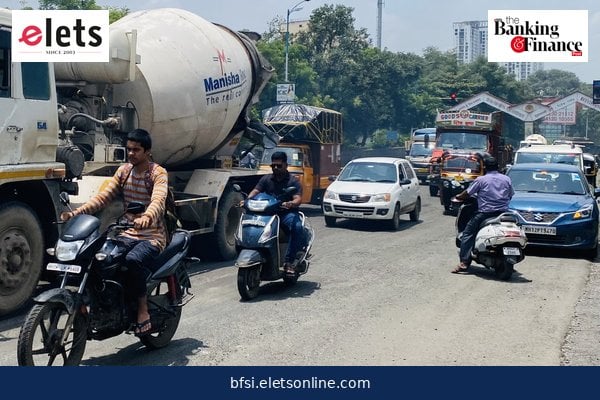
Featured image: Cars, two-wheelers and trucks on a road in Pune. Photo: Ganesh Dhamodkar via Wikimedia Commons (CC BY 4.0).