
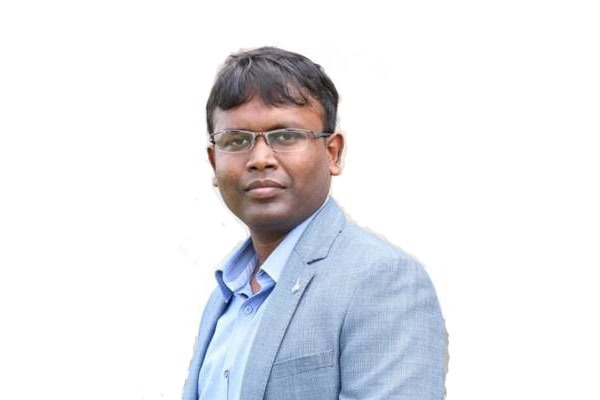


The outbreak of the pandemic and its continual ill-effects has compelled several organisations across the globe to transform and imbibe the digital delivery model for business continuity. During this time, risk management, in particular, is an area that has come into the focus. To understand the challenges and changes associated with the digital inclination lately, Elets News Network (ENN) spoke to Satyanandan Atyam, Chief Risk Officer, Tata AIG General Insurance Co. Ltd.
During the exclusive interaction, Atyam spoke on the lines of risk posture of the organisations that at large transformed due to the disruptive change of remote work for significant workforce. He also spoke about the agility around digitising the business processes for continuity and growth and how it brought the risk around frauds, cyber risks, phishing attacks and numerous threats vectors.

Several reports suggest that the new technology environment has increased exposure to cyber risk?
The digital acceleration across industry domains and consequently in the organisations has increased the footprint of business processes of customer acquisition, growth, servicing, retention for the unique customer needs, attitudes and behaviours in cyberspace. This increased footprint requires the organisations to open up the connection from an internal network to the external world. The IT architectures and the corresponding cybersecurity architecture need to be built together in coherence to ensure the cybersecurity exposures are contained against the ever prevailing threats.
Rising levels of digital interaction and remote work have changed companies’ overall operation risk. What kind of things as a CRO should be concentrated upon lately?
The risk posture of the organisations at large has transformed and is into monitoring mode if not adverse due to the disruptive change of remote work for the significant workforce and also the agility around digitising the business processes for continuity and growth. This agility has brought the risk around frauds, cyber risks, phishing attacks and numerous threats vectors that were never on the radar whenever threat assessment was carried by the risk functions. These threat vectors could exploit the vulnerability in the new digitised business processes which have been proliferating with the new API’s /integrations. The fraud patterns and threats from the external market environments could impact the organisation and need to be monitored. The Risk team need to have threat assessments carried out to ensure the new threat vectors are identified and the emerging risks are mitigated by working with first-line functions.

What opportunities you foresee as CRO to lead the Insurance sector in the future keeping the current scenario in mind?
Risk and opportunity go hand in hand. The opportunities are galore and in this quest for dynamically growing the business the risk and control has to go with business growth to ensure that sustainable business model is created. The Insurance sector is witnessing a technology disruption in distribution, claims survey & assessment, Underwriting & policy issuance with Analytics, cloud-based solutions and Digital integrations. This also gives way to an altogether different way of doing business and the creation of new business processes in line with disruptive technologies. The role of risk and control as a second line of defence in the organisation has an equally challenging task to have a better-integrated risk management processes operating in the enterprise to ensure the new age risks are identified as the threat vector is also changing.
Also Read: Challenges that the cyber insurance industry is facing
With 17 years of Global experience, how do you think businesses can deliver better outcomes in times of a crisis?
The Response and recovery is the key determinant for any business in time of crisis. The ability to respond and recover within the recovery time objectives will be key for the businesses to come out unscathed in the event of a crisis. To bring the teams together in a crisis needs strong leadership and organizational culture which resonates together with common values in the ecosystem.