




Insurance, like most other economic products, is influenced by geopolitical developments, changes in economic conditions, and shifts driven by technology and environmental factors. In a market like India, which is experiencing rapid transformation driven by digital adoption, these shifts present both challenges and opportunities. In this climate, Indian insurers, brokers, and corporates should reassess their strategies to remain resilient, competitive, and forward-looking. The risk factor is always high, although its frequency, severity, and exposure may vary.
In the last five years, the Russia-Ukraine conflict and the war in Gaza have resulted in supply chain disruptions and a spike in inflation rates globally. The spectre of a global recession, the impact of US tariffs and so on is also changing the risk indices considerably.

For Indian exporters and importers, these conflicts and wars have meant higher marine, cargo, and hull insurance rates. As war-risk premiums have increased for vessels in sensitive corridors, such as the Persian Gulf and the Strait of Hormuz, freight rates have been constantly adjusted, making trade credit underwriting more complex. It has impacted reinsurance pricing and availability, as higher claims push reinsurers to raise rates and tighten terms. It has led Indian underwriters to become cautious, shifting from risk acceptance to risk avoidance in certain sectors, such as shipping and energy.
The conflicts and supply chain disruptions have led to a spike in marine and cargo insurance costs, causing shipping firms in some regions to face higher hull and protection and indemnity (P&I) premiums. This has led to increased demand for insurance products, such as supply chain disruption coverage and political risk insurance.
Meanwhile, the impact of climate change is also being felt globally, and extreme weather events are prompting a sharper reevaluation of risk portfolios. As losses due to natural catastrophes increase, reinsurance costs also tend to go up. This, in turn, is resulting in more interest in products such as parametric insurance models, which tend to offer payouts on predefined triggers such as rainfall levels or wind speeds. Insurers are also looking to design tailored climate-resilience coverage for multiple sectors, including agriculture, infrastructure, and renewable energy.

India’s talent density, a young population, and strong IT and analytics capabilities have made it a tech-focused growth hub for global insurers and brokers, and it is seen as an area focused on innovation. As demand for better cyber insurance tools increases, India offers a good potential to develop niche products like environmental liability and digital supply chain protection.
These are the green shoots. That said, challenges do exist. One of the big issues which needs to be tackled is uninsured losses. These are the major financial gaps that are not covered by insurance, for multiple reasons. For businesses, this could lead to major losses, impacting cash flows, delaying recovery, and forcing owners to use capital for damage control. As risks increase and become more complex, a comprehensive approach to risk assessment and periodic policy reviews is becoming very important along with addressing the protection gap.
Another challenge is that rising reinsurance rates can impact margins. The frequency of catastrophic events could push capital adequacy requirements, while volatility in global markets can impact life insurers’ investment income. These issues call for broader and sophisticated coverage solutions. Insurance is thus a good antidote for risk, which may not eliminate uncertainty, but can help businesses and individuals manage it with greater confidence.
At the same time, these headwinds are creating fertile ground for innovation. New product lines such as political risk cover, climate-risk insurance, cyber liability, and supply chain disruption policies are gaining traction. Advanced underwriting models using big data, AI, and satellite imagery can enhance climate and risk assessment. Export-oriented insurance solutions are being developed for Indian businesses expanding abroad, while partnerships with global insurtechs are improving distribution, underwriting, and claims processes. Here, risk management itself must evolve: its philosophy has to be upgraded in times of uncertainty, moving from a narrow focus on protection to a broader approach that includes resilience and growth.
For businesses and brokers, adaptive strategies are the key to navigating this environment. Diversifying risk across geographies, sectors, and reinsurance partners can help reduce vulnerability. Scenario planning for geopolitical, economic, and climate-related events enables better preparedness. Strengthening client advisory services to proactively identify coverage gaps and investing in digital resilience through cybersecurity infrastructure are becoming essential. Insurance in this sense does not merely provide capital in the event of a loss, it offers an opportunity to remain secure, maintain continuity, and sharpen the growth perspective, even in volatile times.
Looking ahead, India has the potential to position itself as a forward-thinking insurance hub. Leveraging its fast-growing economy, regulatory reforms, and insurance penetration push can help attract global reinsurers. Adopting ESG-focused underwriting aligns with sustainable finance goals, while harnessing the country’s tech and analytics ecosystem can create globally competitive insurtech platforms. India could even become a testbed for innovative insurance products tailored to the needs of emerging markets worldwide.
Global events will continue to inject uncertainty into the insurance landscape, but for India, these disruptions also create fertile ground for innovation, product diversification, and strategic expansion. By embracing adaptive strategies, deepening global collaborations, and proactively developing cutting-edge solutions, India’s insurance sector can not only weather these shifts but also play a defining role in shaping the future of global risk management.
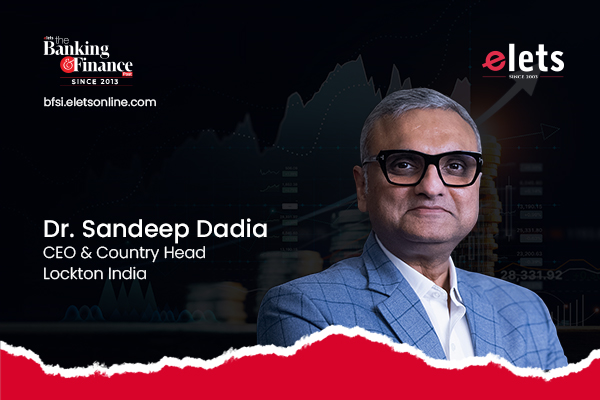
Views expressed by: Dr. Sandeep Dadia, CEO & Country Head, Lockton India