


Businesses have been grappling with increased volatility and uncertainty, caused by a constantly evolving business landscape due to changing consumer trends and stiffer competition brought about by rapid digitalisation. In a bid to stay relevant and thrive in such a volatile environment, leaders have to ditch traditional management approaches and transform organisational structures such that their businesses can respond quickly to the external climate. This requires HR leaders to have an accurate understanding of both current and future talent requirements, making a conscious effort to integrate holistic learning and development initiatives that can continuously upskill their workforce in the face of increasing technology integration. Let us look at three key mantras for businesses undergoing rapid transformation and explore how HR leaders can master the art of implementing organisational changes, all the while ensuring business continuity and maintaining organisational alignment.
Adopting an agile organisational framework to quickly respond to business needs

Before undertaking any large-scale organisational change, it is important that HR managers
and leaders understand all factors that impact operational performance and assess all possible implications of the proposed changes to an organisation’s structure. The aim is to map all business and operational variables, utilising this data to plan manpower requirements and tweak the organisational structure to make use of all presented business opportunities. This requires establishing an agile governance structure with a people-centric work culture, driven by leaders that empower employees to strive for excellence in their individual work areas. A critical pillar is to identify key capabilities required for the transformation and assess the capability gaps. Addressing the gaps through Build vs Buy strategy should be a key priority. As a result of this all-round focus, businesses can better respond to changing consumer needs or ambiguity in terms of the near-term demand outlook, thereby optimising the use of human resources to achieve the organisation’s outlined goals and objectives.
Building an employee-centric culture to support organisational alignment
In order to build an agile organisation, it is pertinent that leaders facilitate open
communication, encourage team members to provide constructive feedback and inspire
innovation at the workplace. Such an employee- centric work culture can be facilitated by actively listening to employee’ suggestions and feedback, with the implicit aim of implementing strategic initiatives or measures that can result in positive business outcomes. The goal is to ensure that every member working in the organisation, from entry-level executives or operators to leaders that make up the top management, is highly attuned to the organisation’s vision and mission. In fact, organisations that prioritises the well-being and personal growth of each employee are more likely to sustain such an employee-centric work culture that is a harbinger of success even in ambiguous business environments.

Embracing new-age technologies to empower human capital
As businesses adapt to the new normal and embrace hybrid working models, organisations are rapidly integrating new-age technologies into the workplace so as to reduce operational redundancies and improve productivity levels. As a result, HR managers and leaders are increasingly relying upon analytical and technological tools to gauge the effectiveness of various HR initiatives, playing a more central role in driving workforce optimisation, talent upgradation and maintaining high employee engagement levels. Additionally, businesses can benefit from reduced HR administration costs by automating routine HR tasks, leaving HR managers with more time to turn data-driven insights into actionable measures that benefit both employees and the organisation in the long run. This focus on leveraging new-age tools and HR data to proactively take decisions can facilitate greater employee retention, ultimately boosting employee performance and supporting business sustenance.
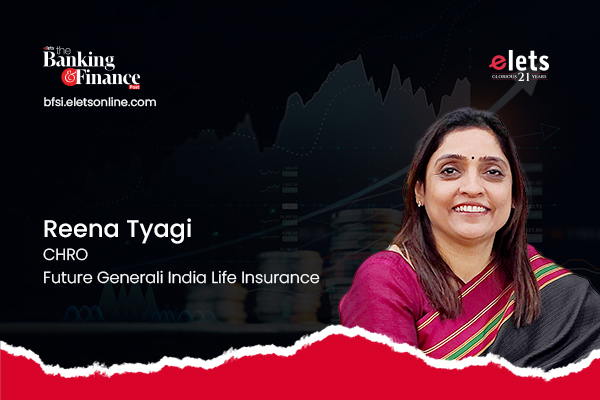
Views expressed by: Reena Tyagi, CHRO, Future Generali India Life Insurance