



The Rs.78,000 crore of unclaimed funds has been making headlines for a while now. The Indian government is making concerted efforts through its ‘Your Money, Your Right’ initiative to help these funds return to their rightful owners. Although the initiative has completed its initial three-month phase, only about ₹2,000 crore has been reunited with owners so far, leaving a vast majority still unclaimed.
These unclaimed funds are not just a lost opportunity for their rightful owners. Rather, they also represent locked-away capital that could otherwise be circulating in the productive economy and supporting financial-sector liquidity. Moreover, it compels the government and financial institutions to take remedial measures and leverage additional operational overheads, further straining resources.

When Idle Money Becomes a System Constraint
Amidst this maze of unclaimed funds, financial institutions are often the least-discussed stakeholders, yet they are significantly impacted, too. Banks continue to pay interest on dormant deposits for up to 10 years before they are transferred to the RBI’s DEA Fund (Depositor Education and Awareness). Since these accounts are inactive, there are no opportunities for engagement or cross-selling, which translates into a cost burden for the institution. Inactive funds reduce the bank’s ability to deploy capital for lending or investment, limiting potential returns.

Additionally, banks also incur ongoing costs to maintain these dormant accounts. They should also invest time and resources in tracing nominees or rightful owners when claims arise. Inoperative accounts are also vulnerable to cyber attacks, requiring banks to strengthen cybersecurity and monitoring systems, further increasing maintenance costs.
To tackle these challenges around unclaimed funds, the government has introduced several platforms, including UDGAM, the Bima Bharosa Portal, the MITRA Portal, and the IEPFA Portal, to help citizens track unclaimed bank deposits, insurance policies, mutual fund units, dividends, and shares. Although this is a strong starting point, only around 2.5% of the approximately ₹78,000 crore has been successfully reclaimed so far. A real game-changer would be a DPDP-compliant federated unified portal that consolidates all unclaimed financial assets, including bank deposits, insurance, mutual funds, shares, and dividends, into a single discovery and claims interface.

Designing a Unified Path Back to Ownership
Banks and other financial institutions need to engage with their customers to educate them about unclaimed deposits. This way, customers do not unintentionally lose track of their own money and allow it to lie idle for years before being transferred to the RBI’s DEA Fund.
There needs to be a privacy-first, federated unified discovery layer that rigorously adheres to the Digital Personal Data Protection (DPDP) Act, and sectoral data localization norms that both banks and customers can use to trace rightful owners. This solution can encompass bank deposits, mutual fund investments, shares, and dividends, and customers can find funds that belong to them. For banks, it also allows them to find nominees of dormant accounts. This also solves a number of hurdles and avoids operational costs that come with tracking, monitoring, and maintaining idle funds. Moreover, as it becomes a solution to identify nominees, it unveils an opportunity for financial institutions to explore upselling and cross-selling, enhancing profitability potential.
Many assets go unclaimed because families are unaware of accounts, lack documents, or do not know where to start, especially after the death of a family member. A single portal combined with proactive education can dramatically cut this friction, making it easier for heirs to discover and claim what is rightfully theirs without running from one institution to another.
For regulators, a consolidated registry of dormant assets across banks, insurers, mutual funds, and retirement schemes creates a powerful data layer. This can be used to track patterns, tighten timelines for claim settlement, refine nomination rules, and design targeted awareness campaigns for segments or regions where unclaimed balances are persistently high.
To ensure strong security guardrails, these platforms can operate on a pointer-based or federated query model, where the platform merely indicates the existence of potential unclaimed assets, while granular account-level details continue to reside securely within the respective financial institutions’ databases. These details are accessed only when a verified claim is initiated, and only by regulated entities. This architecture preserves institutional data boundaries by design and aligns naturally with the principles of data minimisation, purpose limitation, and consent under the Digital Personal Data Protection Act, as well as existing sectoral data localisation norms.
The next logical step is a secure, compliant, and federated regulator-wide platform that brings together UDGAM-like discovery layers from RBI, SEBI, IRDAI, PFRDA, and EPFO. This way, through role-based and regulated access, stakeholders can rely on a single, trusted interface to discover unclaimed assets and trace rightful nominees across the financial system.
Reconnecting People, Capital, and the Financial System
Unclaimed funds are often perceived as an individual problem, but at scale, this becomes a structural issue. Idle balances distort how capital moves through the financial system, impose operational and compliance burdens on institutions, and create friction for families already navigating loss, documentation gaps, or simple uncertainty about where to begin.
India has already taken meaningful steps with portals like UDGAM, IEPFA, and Bima Bharosa. Yet, the fragmentation of discovery still keeps too much value out of reach for too long. A unified, regulator-wide platform is not just a digital convenience; it represents a shift towards clarity, accessibility, and systemic efficiency. With this, claims become simpler. Institutions regain capacity. Regulators gain insight. And the financial ecosystem functions with greater trust and transparency.
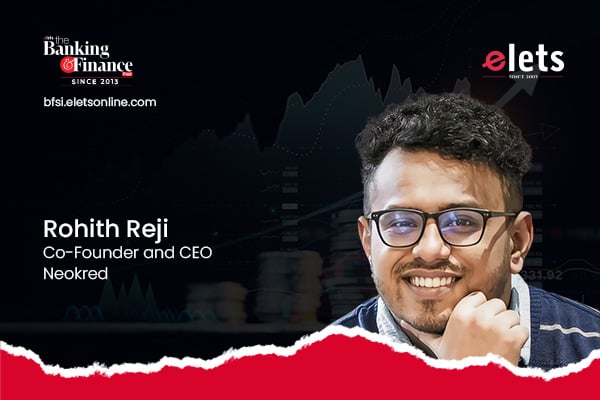
Views expressed by: Rohith Reji, Co-Founder and CEO, Neokred