




India’s insurance adoption is gaining momentum, with a steady increase in total premiums. Yet a significant portion of rural and semi-urban heartland remains uninsured or underinsured. With insurance penetration at just 3.7% of GDP, which is far below the global 7%, the need for deeper reach is urgent. Despite multiple government schemes and efforts to increase awareness around financial protection, the insurance penetration in rural India still lags behind. The challenge lies not in demand, but in access, awareness, and most importantly-trust.
As the government sets its sights on ‘Insurance for All’ by 2047, we are seeing industry stakeholders coming together and working towards this goal. There is a need for concentrated efforts to increase awareness and accessibility in Bharat. And to truly make ‘Insurance for all’ a reality, the future of insurance must rest on two pillars: the power of technology and the strength of trusted, local connections.

The government of India has launched several initiatives to enhance insurance accessibility, especially for vulnerable populations. Programs like ‘Pradhan Mantri Jeevan Jyoti Bima Yojana (PMJJBY), ‘Pradhan Mantri Suraksha Bima Yojana’ (PMSBY), and ‘Ayushman Bharat’ to bridge the insurance gap. PMJJBY and PMSBY provide affordable life and accident insurance to millions, while Ayushman Bharat offers health insurance coverage to nearly 55 crore citizens, making healthcare accessible to economically disadvantaged families. These initiatives have made significant progress in improving financial security, but last-mile delivery remains a challenge. Even with these schemes, the absence of local agents, lack of personalised services, and mistrust of institutions prevent full adoption, impeding broader financial inclusion.
Distribution Gap
A significant obstacle to expanding insurance in Bharat is the distribution gap. While urban areas are becoming increasingly digitised, rural India still faces barriers when it comes to personalised distribution, customer awareness, and trust-building. Many rural households lack easy access to insurance agents who can explain policies, offer guidance, and provide the necessary support when it comes to filing claims. Traditional models of distribution often fail to connect with people in the language they understand, nor do they consider the diverse needs of rural customers. To effectively penetrate rural markets, insurers must shift from a one-size-fits-all approach to a more tailored strategy that considers the cultural and financial dynamics of rural India.
Bridging the trust
The population in Bharat is unaware of the value of insurance, and some perceive it as unaffordable. Even when aware, misconceptions about the complexity of insurance products and their accessibility remain. Past negative experiences, such as the one with Sunita Devi, especially with claim settlements, have furthered mistrust in insurance institutions. The absence of clear, transparent communication about policies and claims processes adds to the problem. Trust, not just accessibility, is a crucial factor in convincing rural populations to engage with insurance products. Bridging this trust deficit is as important as offering the product itself.
Technology + Trust as key pillars to solve these gaps
The key to overcoming these challenges lies in leveraging technology. Advances in Insurtech and digital insurance have provided innovative ways to reach rural customers efficiently, creating an ecosystem that offers affordable, accessible, and trustworthy insurance products. Technology simplifies onboarding with paperless processes, instant policy issuance, and vernacular support, making insurance more accessible and easier to understand. Moreover, data analytics and AI-driven insights help create customised need-based insurance offerings.
One of the most meaningful developments in expanding insurance access in Bharat is the rise of assisted technology models. These models bridge the digital literacy gap by enabling individuals to engage with insurance products through trusted, tech-enabled local agents. Whether it’s a micro business such as a kirana store owner acting as a Digital Pradhan or an enterprising homemaker as a Digital Naari, these agents are equipped with digital tools to onboard customers, explain policy benefits, and assist with claims.
For instance, a retailer in a village market can help a farmer understand how a health or life insurance policy could secure his family’s future. By communicating in the farmer’s language and simplifying the process, the agent builds trust and ensures the product is not only purchased, but understood and valued. This trust-based, community-led approach is key to increasing adoption and long-term engagement with insurance across rural India.
Building a scalable Insurance ecosystem.
By merging community-based distribution with digital infrastructure, a scalable insurance ecosystem can be created. Technology-enhanced distribution networks and customer-centric solutions can boost financial inclusion and drive insurance adoption in rural India. This model makes insurance more affordable, accessible, and trustworthy, addressing gaps in awareness, distribution, and support.
Also Read: Shaping Lending’s Future: New Trends in Credit and Debt Management
The future of insurance in Bharat depends on the blend of technology, innovation, and trust. As we work towards the vision of ‘Insurance for All’ by 2047, we must encourage collaborations between public and private partnerships, between insurers and technology platforms, and harness the trust within a local community. This can bridge the rural-urban gap, making insurance accessible, affordable, and reliable for all, ensuring insurance becomes a necessity, not a luxury.
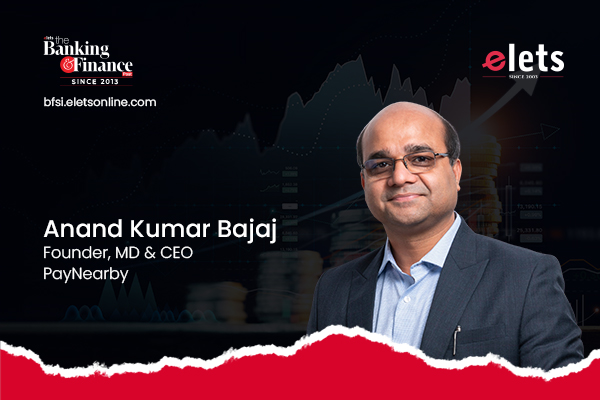
Views Expressed By: Anand Kumar Bajaj, Founder, MD & CEO, PayNearby



Elets The Banking and Finance Post Magazine has carved out a niche for itself in the crowded market with exclusive & unique content. Get in-depth insights on trend-setting innovations & transformation in the BFSI sector. Best offers for Print + Digital issues! Subscribe here➔ www.eletsonline.com/subscription/