



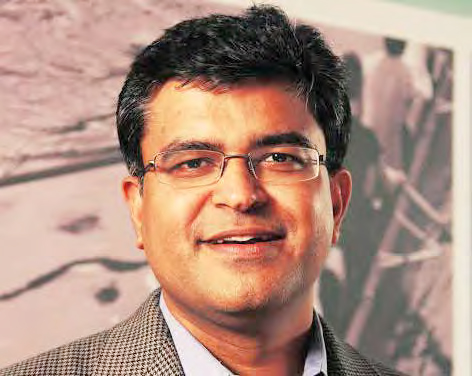


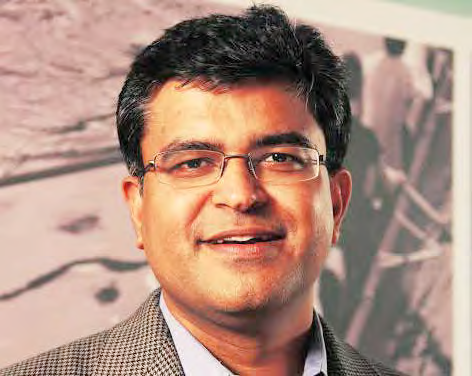
 Puneet Bhirani,
Chief Administrative Officer & Head – MphasiS Payment Managed Services SBU
Today Financial Inclusion is being seen as an important strategy for changing the economic landscape of the country. Capital formation through credit and financial services is necessary for inclusive and sustainable growth. However, it is a major challenge to provide access to financial services to the citizens residing in the 6 lakh villages across the country. While the ATM industry has grown at an exponential rate year on year in the urban/semi urban areas, rural India lacks ATM penetration as the channel of delivery has not been cost effective. Last year, Ministry of Finance and a consortium of public sector banks in India entered into contract with multiple Managed Service Providers for installing and managing a total of 63,000 offsite and onsite ATMs across urban and rural India. This is by far one of the largest initiatives adopted by the Indian Government to widen the reach of this facility beyond the Tier I and Tier II cities. ATM deployment has been one of the biggest projects for MphasiS and the team will deploy and manage about 14000 new ATMs in 2 years, which amounts to 25 ATMs per day. As of September 2013, the MphasiS has delivered more than 5000 ATMs. This delivery has been made within a short span of 9 months. Our goal is to roll out these ATMs by 2014.

The strategies for the Project
The execution of such a large scale project usually involves the involvement of large workforce working though a system of decentralized operations. The model lacked visibility, transparency and control over the field processes. At MphasiS, our key objective was to challenge the industry practice and run a highly technology-driven and automated operation with a lean workforce by bringing in our expertise in technology, thereby challenging industry practices and setting new standards for delivery excellence. The focus has been on innovation led approach for creating next practices to increase the deployment efficiency. MphasiS Payment Managed Services team has built a scalable ecosystem by developing unique cloud based work flow tools that have never been witnessed by the Indian ATM industry before. This tool integrates and tracks the entire lifecycle of a site from sourcing to final installation on a realtime basis and is accessible by all key stakeholders, delivering non-linear growth.
Way ahead
The major focus going forward should be on getting even more people-centric. We have to enable the end users to get them accustomed with card transactions and avoid the traditional way of transacting through the branch’s teller. The initiatives by the ministry and the Banks to actively drive issuance of debit/ credit cards facilities to the masses will be critical for ensuring that the benefits of the investments being made in the expansion of ATM channel are sufficiently availed. The initiatives to shorten the learning curve of accepting ATM as almost a branch, will lead to a shift in the mindset of the masses. An increase in the density of ATMs in the country is just another way of achieving financial inclusion. With some familiarization and training, there is no reason why the rural populace cannot walk into an ATM kiosk to manage their basic banking related needs. But whether you’re running an ATM or a bank, CIOs need to focus not only on the technology but also on the actual needs of the customers. Now is the time to reap the benefits of newer technologies and infrastructure and to achieve the dream of financial inclusion in the country