




Credit isn’t money you borrow. It’s a decision you make about your future self. And like most decisions, it can go brilliantly right or quietly wrong.
Let me start with a confession. After years of sitting across the table, having watched thousands of customers, home loan seekers, business owners, and first-time borrowers, the question I hear most often is: “Should I take this loan?” And my honest response? It depends on almost nothing that I or the bank can tell you. It depends entirely on what you plan to do with it.

Credit, at its core, is neutral. It can fund your busiest quarter or quietly drain you for months. The outcome depends on how you use it and what you use it for.
The Question That Changes Everything

Before you sign any loan document, ask yourself one thing: Am I borrowing to consume, or to create?

A home loan builds an asset that (usually) appreciates. An education loan funds skills that compound over decades. A business loan, timed right, can turn one good season into a permanent step-up in your enterprise. These are purposeful loans that put something in the world that wasn’t there before.

A personal loan for a destination wedding? That’s consuming. Although there’s nothing wrong with it, as long as you’re doing it with open eyes and a clear repayment plan. The problem isn’t the vacation. The problem is pretending it’s an investment.
The most financially free people aren’t those who avoid credit. They’re those who used it deliberately, sparingly, and always in service of something larger than the purchase itself.
Credit Has a Personality Type – Know Yours
Not all debt is created equal. Here’s a simple way to think about it:
- Productive Credit: Home loans, education, business expansion
- Neutral Credit: Car loans – depreciating asset, but often necessary
- Trap Credit: Revolving card debt at 36% p.a. – the silent wealth destroyer
Most people never stop to classify before they commit. They see an EMI that “fits” their monthly income and sign up. But fitting today and being healthy over five years are very different things.
Your Credit Score Is a Conversation
People think of a credit score as a judgment, a number someone else assigns you. I think of it differently. It’s a conversation your past self is having with your future lender.
Every missed EMI is your past self whispering: “I wasn’t reliable when it mattered.” Every on-time payment, every loan closed cleanly, is your past self-saying: “Trust me. I’ve been here before, and I delivered.”
Banks aren’t being cold when they pull your CIBIL score. They’re trying to hear that conversation. A good score doesn’t just get you a loan, it gets you a better loan. Lower interest rates, faster processing, larger limits. Over a lifetime of borrowing, the difference between a 720 and an 800 score can run into several lakhs.
What the Smart Borrowers Do Differently
After years of watching this play out, here’s what separates those who grow with credit from those who get buried under it:
The smarter ones borrow with a repayment plan already in place, not a vague intention, but an actual plan. And perhaps most importantly, they don’t hide their financial situation from their banker. The customers who come to us when things are going well and build a relationship get far better terms when they need help. The ones who show up only when they’re desperate get… well, let’s say standard terms.
Unplanned borrowing or misplaced intent is like driving with your foot hard on the pedal because the car can go faster. Doable but not advisable.
What the Numbers Speak
The numbers put up an interesting picture. Indians haven’t just become more comfortable with credit; they’ve become more intentional about it. Retail credit as a share of GDP has nearly doubled from around 9% in FY14 to almost 18% in FY25, with Gross Non-Performing Assets falling sharply from 11.46% in 2018 to nearly 2.31% in 2025. This reflects a behavioural shift where people are not just borrowing but also paying back responsibly, which brings us back to the same point: credit itself isn’t good or bad. Intent is what decides the outcome.
One Last Thing
I started by saying credit is neutral. But let me revise that slightly. Credit, in the hands of someone who’s thought it through, is one of the most powerful tools available to an ordinary person for building an extraordinary life. A first-generation entrepreneur who can’t access working capital stays small. One who can and uses it wisely builds something that outlasts them.
That’s not a macroeconomic argument. That’s just a story I’ve seen play out, over and over, in a branch, at an office, city after city.
So the next time you plan to borrow, to consume, or to create, answer that honestly. The rest will play just the way it’s supposed to.
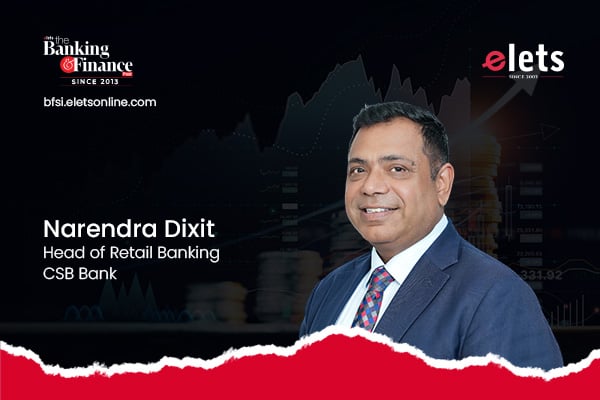
Views expressed by: Narendra Dixit, Head of Retail Banking, CSB Bank