




India’s fintech ecosystem stands at a remarkable juncture. Over the past decade, the country has emerged as one of the world’s most dynamic fintech markets, driven by rapid digital adoption, groundbreaking innovation, and progressive regulatory frameworks. The success of digital payments, financial inclusion initiatives, and technology-led banking has positioned India as a global benchmark in fintech transformation.
However, sustaining this momentum and achieving global leadership by 2030 will require a renewed strategic focus. While celebrating the sector’s achievements, it is equally important to address the areas that will define the next phase of growth. These priorities can be encapsulated through what I call the “Five Ps” of Fintech — Personalization, Portability, Protection, Prediction, and Partnership.

Personalization: Moving Beyond One-Size-Fits-All Banking
Personalization has long been discussed within financial services, but true personalization remains largely unrealized. Many institutions continue to design customer journeys as standardized experiences, expecting customers to adapt to predefined processes and products.
The future belongs to organizations that embrace hyper-personalization. Leading global fintech companies are already leveraging data, analytics, and artificial intelligence to tailor products, services, and interactions to individual customer needs. Such approaches not only enhance customer satisfaction but also reduce friction across the financial journey.
For Indian fintechs and financial institutions, the challenge is clear: shift from designing solutions for the average customer to creating solutions for every customer. This transformation will be fundamental to improving customer engagement and loyalty in the years ahead.

Portability: Creating Unified Financial Experiences
The second pillar of future fintech success is Portability. Today’s fintech solutions are highly effective at solving specific financial challenges. Yet customers increasingly seek a consolidated view of their financial lives rather than navigating multiple disconnected platforms.
The rise of the Account Aggregator (AA) framework offers a powerful foundation for this evolution. By enabling secure and consent-driven sharing of financial information, the AA ecosystem has the potential to create unified financial experiences where consumers can make informed decisions based on a comprehensive view of their financial health.
Much like how ride-hailing platforms simplified mobility by aggregating services into a single experience, fintech must evolve toward integrated financial ecosystems that deliver seamless, one-stop solutions for customers.
Protection: Strengthening Trust in the Digital Era
As digital adoption accelerates, Protection has become more critical than ever. While significant progress has been made in data privacy and governance through initiatives such as the Digital Personal Data Protection (DPDP) framework, financial fraud continues to pose serious challenges across the banking and fintech sectors.
The industry’s task is not merely to build stronger security systems but to strike the right balance between protection and user experience. Excessive security controls can create friction, while insufficient safeguards expose customers to growing risks.
The next generation of fintech innovation must therefore focus on delivering robust fraud prevention mechanisms, advanced risk management capabilities, and proactive customer protection without compromising convenience and accessibility.
Prediction: The Shift Toward Intelligent Banking
The fourth pillar, Prediction, represents one of the most transformative opportunities for the future of financial services.
Traditionally, banking has been reactive—responding to customer requests after they are made. The future, however, lies in anticipating customer needs before they are explicitly expressed. Advances in artificial intelligence, machine learning, and predictive analytics are making this possible.
By combining predictive intelligence with personalization, financial institutions can provide timely recommendations, automate decision-making, and offer contextual financial support in real time.
This evolution could eventually lead to a new paradigm of menu-less, prompt-driven banking experiences, where customers interact naturally with intelligent systems that understand intent and proactively deliver solutions. Such a model has the potential to fundamentally redefine how consumers engage with financial services.
Partnership: Taking Indian Fintech to the World
The final pillar is Partnership, particularly in the context of expanding India’s fintech influence globally.
While Indian fintech has achieved extraordinary success domestically, its international footprint remains relatively limited compared to its potential. Yet the opportunity for global expansion has never been greater.
India’s growing network of over 2,200 Global Capability Centers (GCCs) presents a significant avenue for collaboration. By partnering with global enterprises, technology providers, and innovation hubs, Indian fintech companies can develop solutions that address international challenges while showcasing India’s expertise on the world stage.
Several organizations have already demonstrated that Indian fintech innovation can succeed globally. However, these examples represent only the beginning. A stronger emphasis on strategic partnerships and cross-border collaboration can help position India as a leading exporter of fintech innovation.
Building the Fintech Ecosystem of 2030
India’s fintech journey has been defined by innovation, resilience, and rapid growth. Yet the next chapter will demand more than technological advancement alone. It will require a customer-centric approach that prioritizes personalization, seamless integration, robust protection, intelligent prediction, and meaningful partnerships.
By embracing these Five Ps, the fintech ecosystem can move beyond domestic success and establish India as a true global fintech powerhouse.
The future of fintech is not merely about digitizing financial services—it is about creating smarter, safer, more connected, and globally relevant financial ecosystems that empower individuals, businesses, and economies alike.
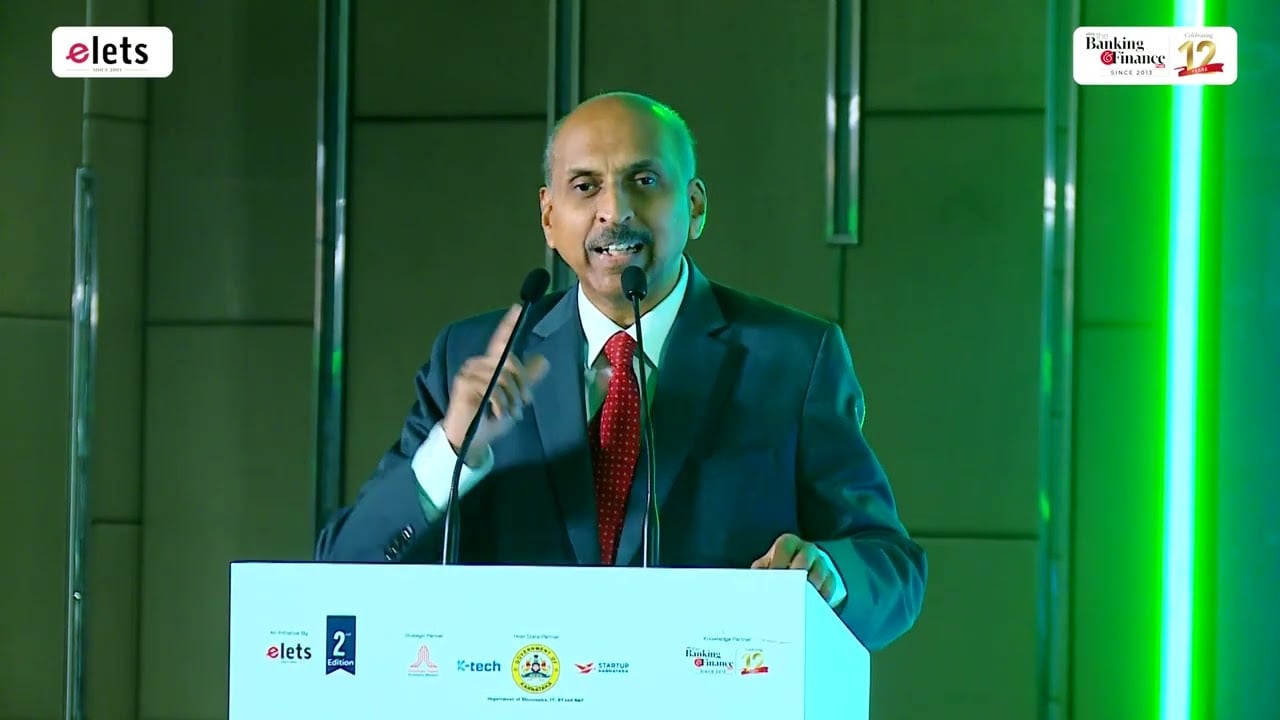
Views Expressed by: Balaji Nuthalapadi, Executive Director, Equitas Small Finance Bank, at the 2nd World Fintech Summit 2026, presented by Sinch and organized by Elets Technomedia in collaboration with the Department of Electronics, IT, Biotechnology & Science & Technology, Government of Karnataka, and the Karnataka Digital Economy Mission (KDEM).