





India’s digital transformation journey has emerged as one of the most remarkable success stories of the modern era. Over the last decade, the country has built a robust and scalable Digital Public Infrastructure (DPI) that has fundamentally changed how citizens access services, verify identities, and participate in the digital economy.
Today, India’s digital ecosystem is not only driving financial inclusion and economic growth at home but is also being recognized globally as a model for secure, inclusive, and citizen-centric digital innovation.

At the heart of this transformation lies Aadhaar, a foundational identity platform that has enabled seamless digital interactions and created unprecedented opportunities for innovation across the fintech ecosystem.
Aadhaar: The Foundation of India’s Digital Revolution
The success of India’s Digital Public Infrastructure is rooted in its ability to provide trusted digital identity at scale.
Aadhaar has transformed the way individuals verify their identities, access government services, open financial accounts, and participate in the formal economy. By creating a secure and universally accepted identity framework, it has significantly reduced friction in service delivery while expanding access to millions of previously underserved citizens.

More importantly, Aadhaar has become a platform for innovation, enabling financial institutions, startups, and technology providers to build solutions that are efficient, inclusive, and scalable.
As digital services continue to expand, the role of trusted identity infrastructure will become even more critical in supporting India’s next phase of digital growth.
Enabling a Paperless and Seamless Future
One of the most significant developments within India’s digital ecosystem is the evolution toward paperless verification and digital credentials.
The ability to securely verify educational certificates, identity documents, licenses, and other credentials without relying on physical paperwork is rapidly becoming a reality. This shift has the potential to dramatically improve efficiency, reduce costs, and enhance user experiences across sectors.
Today, more than 100 Offline Verification Seeking Entities (OVSEs), many of them operating within the fintech ecosystem, are leveraging Aadhaar-enabled verification frameworks to simplify customer onboarding and service delivery.
As adoption grows, digital credential verification will become a cornerstone of India’s paperless economy, enabling faster, more secure, and more accessible digital interactions.
Collaboration as the Engine of Innovation
The progress of India’s Digital Public Infrastructure has been driven by a unique model of collaboration between government institutions, regulators, startups, academia, and the private sector.
Organizations such as UIDAI, the RBI Innovation Hub, and various technology centers have created an ecosystem that encourages experimentation, innovation, and problem-solving. This collaborative approach has enabled entrepreneurs and developers to build practical applications on top of trusted digital infrastructure.
For fintech companies and startups, these partnerships create opportunities to address real-world challenges while contributing to the broader goals of financial inclusion and digital empowerment.
The continued success of India’s digital ecosystem will depend on maintaining this spirit of collaboration and ensuring that innovation remains accessible to all stakeholders.
Addressing Emerging Security Challenges
As digital adoption accelerates, security remains a critical priority.
Emerging technologies such as Artificial Intelligence offer enormous potential to improve efficiency, personalization, and service delivery. However, they also introduce new risks that must be carefully managed.
The increasing sophistication of AI-driven fraud, presentation attacks, and replay attacks presents significant challenges for identity verification systems. Building resilient and trustworthy authentication mechanisms requires continuous innovation and close collaboration between technology providers, fintech companies, and public institutions.
Ensuring trust in digital systems will be essential to sustaining user confidence and supporting the continued growth of the digital economy.
The Next Frontier: Contactless Biometrics and Mobile Authentication
The future of digital identity is moving beyond traditional authentication methods.
Advancements in contactless biometrics and mobile-based authentication are opening new possibilities for secure and convenient user experiences. Smartphones are increasingly becoming trusted authentication devices capable of facilitating seamless identity verification without requiring dedicated hardware.
These innovations have the potential to expand access to secure digital services while improving convenience for users across urban and rural markets alike.
Realizing this potential will require active participation from startups, researchers, developers, and established institutions working together to create solutions that are both innovative and secure.
Preparing for the Quantum Era
As technology continues to evolve, it is essential to anticipate future risks and opportunities.
One area receiving increasing attention is post-quantum cryptography. While quantum computing promises transformative advancements, it also has the potential to challenge existing cryptographic systems that underpin today’s digital infrastructure.
Recognizing this reality, active efforts are already underway to develop quantum-resistant security frameworks that can protect critical digital systems in the years ahead.
Building future-ready infrastructure is not simply about responding to current challenges—it is about proactively preparing for the technological landscape of tomorrow.
Creating a Trusted and Inclusive Digital Economy
India’s Digital Public Infrastructure has demonstrated how technology can be used as a force for inclusion, efficiency, and empowerment.
The next chapter of this journey will require continued collaboration among government agencies, regulators, fintech companies, startups, researchers, and technology innovators. Together, these stakeholders have the opportunity to build a digital ecosystem that is not only technologically advanced but also secure, resilient, and trusted by citizens.
As India continues to lead global conversations around digital identity and financial inclusion, the focus must remain on creating systems that balance innovation with security and accessibility with trust.
The future of digital finance will be defined not merely by technological breakthroughs, but by the ability to create digital ecosystems that people can confidently rely upon. Through collaboration, innovation, and a shared commitment to public good, India is well positioned to lead that future.
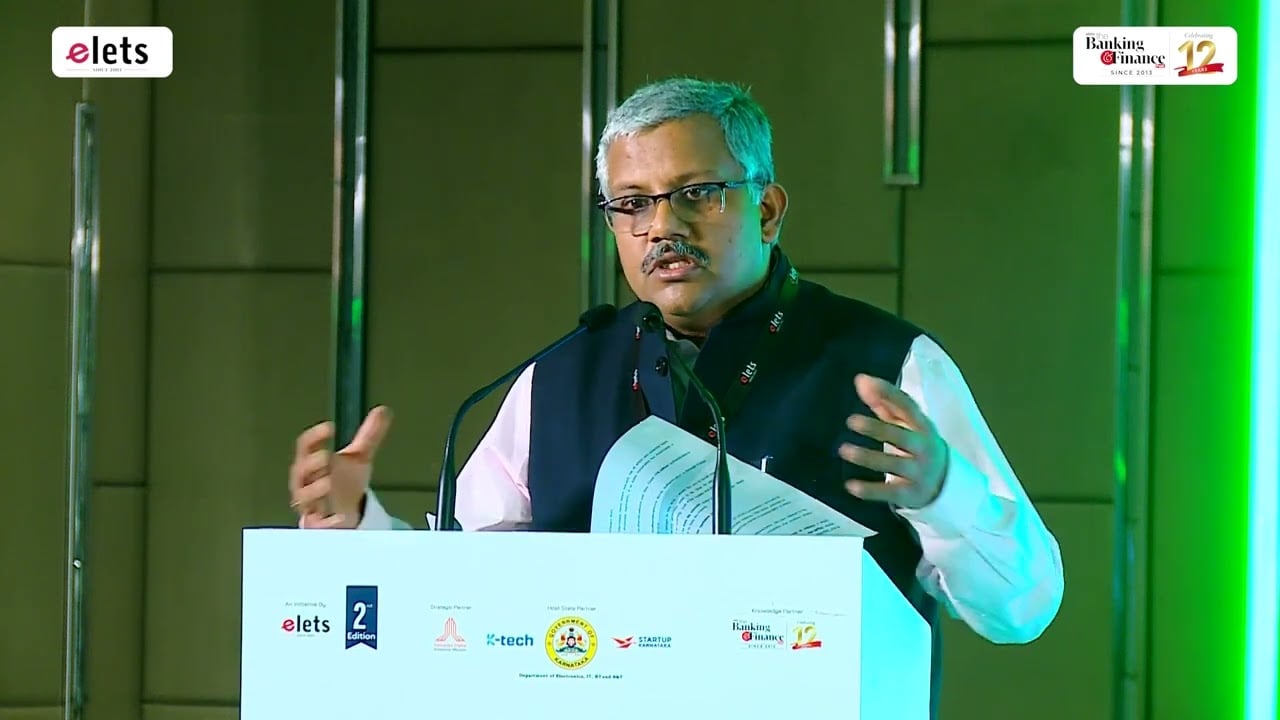
This article is based on the address delivered by Abhishek Kumar Singh, Deputy Director General, UIDAI, at the 2nd World Fintech Summit 2026, presented by Sinch and organized by Elets Technomedia in collaboration with the Department of Electronics, IT, Biotechnology & Science & Technology, Government of Karnataka, and the Karnataka Digital Economy Mission (KDEM).