



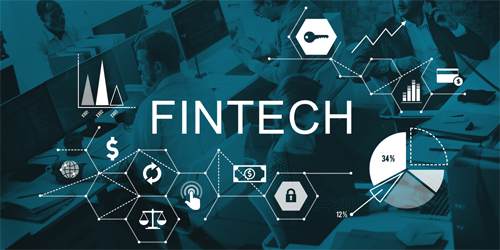
At the confluence of finance and technology, we built FinTech – a sphere that seeks to streamline, improve and automate the delivery and use of financial services, helping consumers and businesses better manage the financial and money-related aspects of their lives. And while the industry has grown by leaps and bounds, there is a multitude of factors that all came together to make it possible.
 The median age of 29 years. The mobile subscriber base of one billion. Over 600 million active smartphone users. Introduction of Jio. 400 million internet users. These were some of the major factors that helped shape the FinTech ecosystem. But even in all of this, the two factors that can be said to have had the biggest impact are age and, of course, the internet disruption brought about by Jio. Jio completely changed the way we communicate and use the internet and brought in a disruption, never seen before in India. And these two factors combined to introduce mass scale digitisation.

The reason why digitisation can be attributed as another major contributor is that it served a multitude of purposes. – enhancing penetration, bringing everything under the radar, removing layers of barriers, easy and direct access, etc. And now, if you look at the aforementioned factors again, you’ll find every single one of them to be common with the finance industry. For the FinTech industry to succeed, bringing everyone under the radar and ease of access were probably two of the biggest challenges. And digitisation helped in solving the two, on the way, making accessing of financial services, a seamless process.
FinTech was also hugely helped by demonetisation which spurred the way for mass scale FinTech adoption. It served as a catalyst and left little for consumers not wanting to avail financial services online. What made it all the more instrumental was, for the first time, even rural India got on the bandwagon of making their presence known, in the online world, by the way of UPI platforms and digital wallets.
There were also unmet financial needs in the market. Serving the marginalised section and regulatory measures were the two ends of the spectrum which were waiting to be addressed. And this is where FinTech played a major role in building a bridge to connect the two ends. If we’re to talk from the numbers point of view, according to a recent World Bank Report, the number of adults in India, with a bank account, has increased to 80%. And while this does paint a very optimistic picture about the financial inclusion, it’s much like the popular proverb, “scratching the surface”.

- The way forward
On the back of new age reforms and some bold moves by the government, FinTech startups have been pivotal in bridging the gap to financial inclusion in India. But this also begs the question, what next? After Demonetisation and Digitisation, who will carry the baton henceforth?
- Answer – Automation!
Automation will bring the next revolution for companies trying to fight consumer challenges. The lazy beings that we are, asking people to do the least number of steps and automating the majority of the procedures, will cease to be an option anymore. By introducing smart workflows and doing away with redundant tasks, automation can help in streamlining the user experience. And the “1-click shopping experience” feature, earlier patented by Amazon, can be said to be a perfect example of automation and removing redundancies in the process.
Especially in FinTech, by automating the money habits of people, while at the same time keeping everything simple and secure, will shape the sector’s future ambitions. If Accenture’s Finance 2020 report is anything to go by, automation is in line to eliminate up to 40 percent of the transactional accounting work. And it can be happily said that when nearly half your work becomes automated, it can free up space for your team to create business value through decision support, predictive analytics and performance management.
Views expressed in this article are a personal opinion of Samant Sikka, Co-founder Sqrrl.in